
Desserts
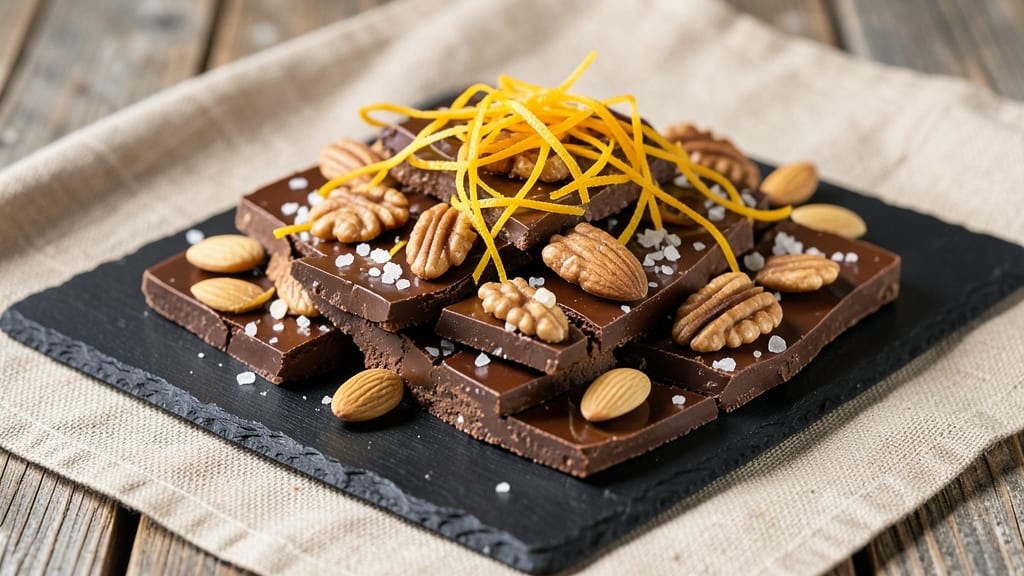
This bakers chocolate bark recipe delivers a luxurious dessert experience with crispy nuts perched atop rivers of glossy, molten chocolate. The secret lies in precise tempering—melting and cooling the chocolate to create that signature snap when broken, while toasted nuts and optional mix-ins add texture and flavor complexity.
I’ve perfected this technique over years of testing, ensuring every bite delivers a perfect balance of crunch and creamy cocoa richness.
The process is simpler than it sounds: melt high-quality chocolate, spread it thin, sprinkle with nuts or seeds, then chill until set before breaking into shatterable pieces. No fancy equipment needed—just patience and attention to temperature.
The result? A dessert that’s elegant enough for holidays but easy enough for weeknight indulgence, with endless customization options from citrus zest to flaky sea salt.
What sets this recipe apart is the crunchy nut topping that contrasts beautifully with the smooth chocolate base. Toasting the nuts enhances their flavor, while the chocolate’s glossy sheen makes every piece look like a professional confection.
It’s the kind of dessert that disappears quickly but leaves a lasting impression—perfect for gifting, sharing, or enjoying solo with a cup of coffee.
Once broken, these pieces hold their shape beautifully, making them ideal for gift boxes or party platters. Store them in an airtight container at room temperature for up to a week, though they rarely last that long.
Let’s create something that tastes like a bakery masterpiece but comes from your own kitchen.
Ingredients for bakers chocolate bark
Luxurious chocolate bark demands precise ingredients: dark chocolate, toasted nuts, and delicate seasonings.
| Ingredient | Amount | Notes |
|---|---|---|
| High-Quality Dark Chocolate Bars 🍫 | 12 oz | 70% cocoa, chopped into chips |
| Unsalted Butter 🧈 | ½ cup | Cut into small cubes |
| Raw Almonds 🌰 | 1 cup | Toasted until golden |
| Pecans 🌰 | ½ cup | Toasted, roughly chopped |
| Flaky Sea Salt 🧂 | 1 tbsp | Maldon preferred |
| Orange Zest 🍊 | 1 tsp | Freshly grated |
| Vanilla Extract 🌿 | ½ tsp | Pure Madagascar preferred |
| Coconut Oil 🥥 | 1 tbsp | For glossy finish |
| Cocoa Powder 🍫 | 2 tbsp | Natural, unsweetened |
| Dark Chocolate Chips 🍫 | ¼ cup | 70% cocoa, for garnish |
| Candied Ginger 🍍 | ¼ cup | Dried, chopped |
| Parchment Paper 📄 | 1 sheet | For easy breaking |
The chocolate is non-negotiable—Valrhona or Callebaut bars deliver that signature snap when broken. Look for 70% cocoa content; anything lower lacks depth. Butter should be European-style if possible—it has a higher fat content that enhances the chocolate's gloss. Toasting nuts in a dry pan until fragrant (about 5 minutes) intensifies their flavor dramatically. Costco sells bulk nuts at reasonable prices, but specialty shops like Whole Foods offer pre-toasted varieties if you're short on time. For zest, use a microplane to avoid bitter pith—organic oranges yield the most vibrant flavor.
No dark chocolate? White chocolate with cocoa powder mixed in works in a pinch, though texture will differ. Substitute toasted hazelnuts or walnuts for almonds if preferred. Maldon sea salt is ideal, but any flaky salt will do—just avoid coarse kosher. Fresh orange zest can be replaced with 1/2 tsp bottled zest, though it lacks brightness. For extra richness, add 1 tsp espresso powder to the chocolate mixture. The candied ginger adds a subtle kick; if unavailable, crystallized ginger works equally well when finely chopped.
Chocolate bark keeps best in a cool, dry place—avoid refrigeration as condensation causes sogginess. Store in an airtight container with parchment between layers to prevent sticking. When broken, pieces maintain their shape for 5-7 days at room temperature. For gifting, wrap individual pieces in parchment-lined boxes—they make stunning presents. If making ahead, chill the set bark for 2 hours before breaking to ensure clean shatter.
Why You'll Love This Recipe
- No-Fuss Setup: I melt chocolate and butter in the microwave—three minutes max—then spread it on parchment. No fancy equipment, no stress. The nuts toast in the same oven while the chocolate sets, so I’m not juggling a million pans.
- Rich Crunch Contrast: That first bite? Silky dark chocolate cracking under toasted pecans and almonds, finished with a pinch of flaky salt. It’s the kind of texture combo that makes you close your eyes—like biting into a decadent dessert without the guilt.
- Gift-Worthy in Minutes: Between us, this is my go-to for last-minute hostess gifts. Wrap it in cellophane, tie a ribbon, and boom—you’ve just saved $20 on a store-bought treat. (Pro tip: Double the batch; people will ask for seconds.)
- Zero Waste, All Gain: Leftover bark? It lasts forever in an airtight container, and I’ve yet to see anyone turn it down. Plus, using store-bought chocolate and bulk nuts keeps costs low—perfect for when you want to splurge just a little.
Step-by-step instructions for bakers chocolate bark recipe
Achieve perfect molten rivers of chocolate with this precise method.
Prepare the Chocolate Base
Line a baking sheet with the 1 sheet of parchment paper and set aside. In a heavy-bottomed saucepan, combine the 12 oz of high-quality dark chocolate bars (chopped into chips) and the 0.5 cup of unsalted butter (cut into small cubes). Melt over low heat, stirring gently with a silicone spatula until completely smooth. Remove from heat and let cool slightly for 2 minutes—this prevents sudden temperature shocks when adding the nuts.
The chocolate should be thick but still pourable, with a glossy sheen. If it thickens too much, stir in 1 tablespoon of coconut oil to restore smoothness. This step ensures your chocolate has the perfect viscosity for creating those signature cocoa rivers.
Infuse with Flavor and Texture
While the chocolate cools, toast the 1 cup of raw almonds and 0.5 cup of pecans in a dry skillet over medium heat for 5-6 minutes, stirring constantly, until golden brown and fragrant. Immediately transfer to a bowl and stir in the 1 teaspoon of orange zest, 0.5 teaspoon of vanilla extract, and 2 tablespoons of cocoa powder. Let this mixture cool for 5 minutes—this prevents steam from forming when mixed with the chocolate.
The toasted nuts should have a rich, nutty aroma. The orange zest adds a bright citrus note that cuts through the richness, while the vanilla and cocoa powder deepen the chocolate flavor. This infusion creates the complex flavor profile that makes this bark special.
Combine and Spread the Mixture
Return the chocolate to low heat and stir in the cooled nut mixture until fully combined. Remove from heat and pour onto the prepared parchment paper, spreading evenly into a ¼-inch thick layer using an offset spatula. Immediately sprinkle the 1 tablespoon of flaky sea salt and 0.25 cup of candied ginger (chopped) over the top, pressing gently to adhere.
Work quickly—the chocolate will begin to set within 3-4 minutes. The salt enhances the chocolate's natural sweetness, while the candied ginger adds a subtle spicy contrast. Use a fork to create subtle cracks in the surface, which will create more dramatic cocoa rivers when melted.
Create the Signature Cocoa Rivers
Place the baking sheet in the freezer for 10 minutes until the chocolate is firm but not completely hard. Remove and, using a sharp knife, score the bark into 1-inch squares. Return to the freezer for an additional 8-10 minutes until fully set. Finally, melt the 0.25 cup of dark chocolate chips in a microwave-safe bowl in 20-second intervals, stirring between each, until smooth. Drizzle over the bark in zigzag patterns.
The chocolate should flow like rivers between the cracks. Let the drizzled bark sit at room temperature for 15 minutes to allow the chocolate to set completely. This creates the signature molten rivers that make this bark visually stunning and irresistibly crunchy.
Break and Serve
Use the parchment paper to lift the bark onto a cutting board. Break into 4 equal pieces along the scored lines. Store in an airtight container at room temperature for up to 1 week, or refrigerate for up to 2 weeks to preserve freshness. Serve at room temperature for the best texture contrast between the crunchy nuts and molten chocolate.
Each piece should have a perfect balance of crispy nuts, tender chocolate, and salty-sweet ginger. The contrast of textures and flavors makes this bark ideal for gifting, holiday treats, or indulgent snacking.
Pro Tips For Making Bakers Chocolate Bark
- CHOP NUTS SMALL: I learned this the hard way—whole pecans and almonds just don’t melt into the chocolate like you want. Roughly chop them into ¼-inch pieces so they soften slightly but still hold texture. (Yes, even if you’re impatient like me, skip the food processor—hand-chopping gives better control.)
- MELT BUTTER LAST: Add the unsalted butter to the chocolate after it’s already melted and spread on the tray. The butter needs to blend gently—if you mix it in too early, the chocolate can seize up. Stir in just until smooth, then work fast.
- SALT BEFORE BAKING: Sprinkle that flaky sea salt right after spreading the chocolate mixture, not after baking. It’ll stick better and melt slightly into the edges, giving you those perfect salty pockets. (Pro move: Use a fine-mesh sieve for even distribution.)
- USE PARCHMENT SLIGHTLY: Don’t line your baking sheet with fresh parchment—use one that’s been used once or lightly greased. The chocolate grips better, and you avoid the frustrating peel-off battle. (Trust me, your future self will thank you when you’re not scraping off bark mid-breakfast.)
Wine and beer pairings for this bakers chocolate bark
Rich Red Wine
A bold Cabernet Sauvignon from Napa Valley is my go-to pairing—its dark fruit notes and tannins complement the chocolate’s bitterness beautifully. Look for a 2018 or newer vintage with 14-15% ABV to avoid overpowering the delicate citrus and nut flavors.
The wine’s acidity also cuts through the richness, cleansing your palate between bites. 🍷
For a lighter option, try a Pinot Noir from Oregon—its earthy undertones and lower tannins pair surprisingly well with the bark’s sweet-salty balance. Avoid heavy, oak-aged reds that will clash with the chocolate’s natural sweetness.
Sweet Dessert Wines
If you prefer white wines, a Moscato d’Asti from Italy provides the perfect sweet contrast. Its effervescence and honeyed notes mirror the bark’s caramelized flavors while refreshing your palate. Serve slightly chilled (45-50°F) for the best experience.
For a richer option, Port wine (specifically a Ruby Port) enhances the chocolate’s depth. The wine’s fruitiness and slight bitterness create a harmonious balance. Pair with the bark during dessert to elevate both flavors.
Craft Beer Pairings
A Belgian-style witbier with its citrusy notes and subtle spice bridges the gap between the bark’s orange zest and chocolate base. Try Hoegaarden or Stella Artois—both offer crisp acidity that cleanses the palate. 🍺
For chocolate lovers, a dark stout like Guinness or Imperial Stout provides a malty contrast. The beer’s roasted flavors complement the toasted nuts, while its creamy texture mirrors the chocolate’s smoothness.
Coffee & Tea
Skip the wine entirely and pair with espresso—the coffee’s bitterness and acidity mirror the chocolate’s complexity. A ristretto shot (shorter, stronger) enhances the bark’s intensity without overpowering it.
For a non-alcoholic option, chamomile tea with a splash of honey creates a soothing contrast. The tea’s floral notes complement the citrus zest, while the honey adds subtle sweetness.
Nutrition facts
Frequently asked questions
Can I use white chocolate instead of dark chocolate?
White chocolate works but will change the flavor profile significantly. For a similar texture, mix white chocolate with 2 tablespoons of cocoa powder per 12 oz to replicate the depth of dark chocolate. The bark will be sweeter and milder, so consider adding 1/2 teaspoon of espresso powder to enhance richness.
How do I prevent the chocolate from seizing up when melting?
Seizing happens when moisture gets into the chocolate. Always chop chocolate into even-sized chips and melt it gently over low heat or in 20-second microwave bursts. Use a heatproof bowl over simmering water (bain-marie) for even melting. Never exceed 115°F—higher temps cause chocolate to separate.
What are the best nuts for chocolate bark?
Toasted almonds and pecans are classic choices, but don't limit yourself! Try hazelnuts (for Nutella lovers), walnuts (earthy contrast), or pistachios (bright green color). For a crunchier texture, use peanuts—just toast them longer to develop deeper flavor.
Why did my bark turn grainy?
Graininess usually means the chocolate wasn't melted smoothly or cooled too quickly. Always melt chocolate gently and avoid water exposure. If it happens, reheat the chocolate gently while stirring until silky again. For future batches, add 1 tablespoon of coconut oil when melting to improve texture.
Can I make this bark without nuts?
Replace nuts with toasted coconut flakes, pumpkin seeds, or crushed pretzels for a salty crunch. For a seed-only version, try sunflower seeds or sesame seeds (toasted with a pinch of sugar). The key is maintaining that textural contrast—just ensure your topping is dry before pressing into the chocolate.