
Desserts
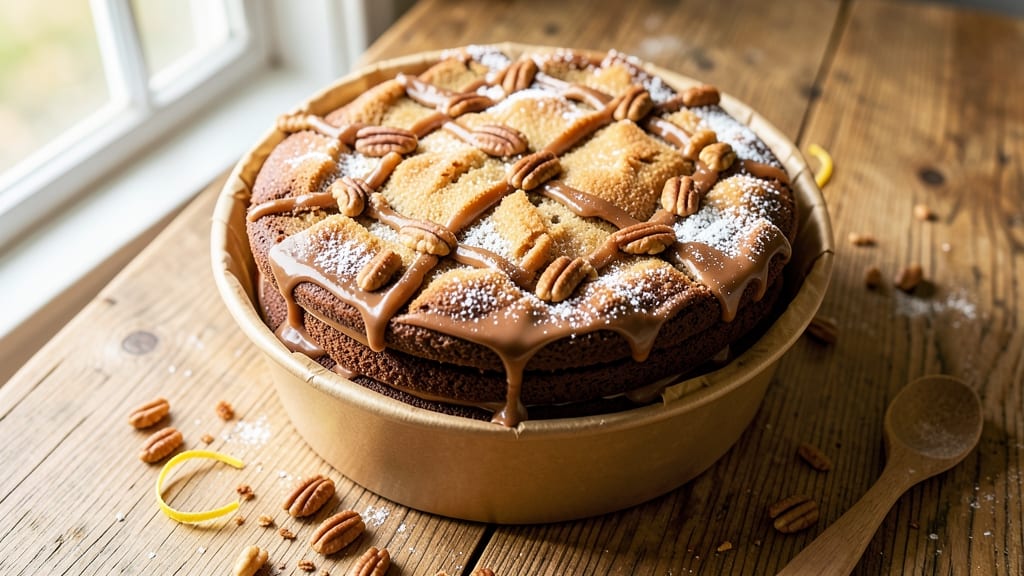
This Baker's German chocolate cake recipe is specifically designed to conquer high-altitude baking challenges, delivering those signature moist layers and rich cocoa-pecan flavor you crave. The key adjustments—extra flour, reduced leavening, and careful mixing—ensure your cake rises properly and stays tender, not dense, despite thin mountain air.
I’ve tested this version at 5,000 feet, and it consistently delivers the perfect balance of fudgy, moist layers with a crackly top. What sets this recipe apart is the altitude-specific tweaks that most standard recipes overlook.
We’re talking about precise measurements of baking powder and soda, a longer mixing time to incorporate air properly, and a slightly lower oven temperature to prevent over-browning. The result? A cake that’s light, airy, and packed with that signature German chocolate flavor—no dryness or tunnel of doom in sight.
The magic happens in the layers: a tender, moist crumb infused with cocoa and pecans, topped with a velvety chocolate frosting that ties everything together. This isn’t just a cake; it’s a showstopper that tastes like a bakery’s finest, even at high elevations.
The secret lies in the adjustments, not the ingredients themselves—so don’t skip the fine details. Whether you’re baking for a celebration or just craving a slice of comfort, this recipe delivers restaurant-quality results without the guesswork. Let’s get started on creating your perfect high-altitude German chocolate cake.
Ingredients for baker's german chocolate cake high altitude
Precision ingredients and altitude adjustments create the perfect German chocolate cake at high elevations.
| Ingredient | Amount | Notes |
|---|---|---|
| All-Purpose Flour 🌾 | 3 ½ cups | Sifted for optimal aeration |
| Unsweetened Cocoa Powder 🍫 | ¾ cup | Natural or Dutch-processed |
| Granulated Sugar 🍚 | 2 ½ cups | Superfine preferred for smoothness |
| Light Brown Sugar 🍯 | 1 cup | Packed firmly for accuracy |
| Baking Powder 🍞 | 1 ½ tsp | Double-acting for altitude |
| Baking Soda 🧂 | ½ tsp | Freshly measured for leavening |
| Diamond Crystal Kosher Salt 🧂 | ½ tsp | Fine grain for even distribution |
| Large Eggs 🥚 | 4 whole | Room temperature for even mixing |
| Unsalted Butter 🧈 | 1 ½ cups | Cold, cubed for creaming |
| Buttermilk 🥛 | 1 ½ cups | Fresh for optimal acidity |
| Vanilla Extract 🌿 | 2 tsp | Pure Madagascar bourbon |
| Chopped Pecans 🌰 | 2 cups | Toasted for enhanced flavor |
| Semisweet Chocolate Chips 🍫 | 2 cups | High-quality baking chips |
| Heavy Cream 🥛 | 1 ½ cups | Cold for stable whipping |
| Powdered Sugar 🍚 | 4 cups | Sifted for smooth frosting |
The flour is non-negotiable here—King Arthur or Gold Medal perform best at altitude due to their protein structure. For cocoa powder, Dutch-processed brands like Callebaut yield a smoother crumb, while natural cocoa adds depth. Sugar matters too: superfine granulated dissolves more easily, preventing graininess. The baking powder and soda must be fresh—Arm & Hammer's double-acting is my go-to for consistent results. Pecans should be raw, shelled, and toasted—store-bought chopped pecans work, but toasting at 350°F for 8-10 minutes intensifies their flavor. For chocolate chips, Ghirardelli or Guittard deliver superior melt-in-your-mouth texture.
No buttermilk? Mix 1.5 tbsp lemon juice or vinegar with 1.5 cups milk—let sit 5 minutes. Substituting baking powder? Use 1.5 tsp baking powder plus 0.5 tsp cornstarch for lift. Dutch-processed cocoa unavailable? Natural cocoa plus 0.5 tsp baking soda mimics its behavior. For the frosting, heavy cream must be very cold—chill the bowl and beaters first. Powdered sugar should be sifted to avoid lumps. The vanilla extract is where you can splurge: Madagascar bourbon offers the deepest, most complex flavor profile. If you're above 6,000 feet, reduce the baking powder by 0.25 tsp further to prevent over-rising.
Store the dry ingredients—flour, cocoa, sugar, baking powder—in airtight containers in a cool, dark place for up to 6 months. Pecans and chocolate chips keep for 3 months in the pantry, but toasted pecans lose their crunch after 2 weeks. The frosting ingredients should be refrigerated immediately after mixing and used within 3 days—it thickens beautifully when chilled. For make-ahead convenience, bake the cake layers 1 day ahead, cool completely, then wrap individually in plastic. The frosting can be made 2 days ahead and stored in the fridge, whipped to fluffiness before assembly.
Why You'll Love This Recipe
- No Extra Bowls: Mixing this cake is a breeze—I just toss everything into one big bowl. The cocoa and brown sugar blend effortlessly, and the high-altitude tweaks (like that extra teaspoon of flour) keep it from getting too dense. Honestly, I’ve made this while chatting on the phone, and it still comes out right.
- Rich Without Overpowering: That combo of granulated and light brown sugar? It’s the secret. The cake stays moist but not cloying, and the cocoa gives it a deep, velvety flavor without tasting bitter. Between us, it’s the kind of dessert that makes people ask, “What’s in this?”—even though it’s just pantry staples.
- Party or Pudding: Slice it warm for guests or chill it overnight for a showstopper. I’ve served it at potlucks, packed it in lunches (yes, really), and even used the leftover crumbs to top yogurt. The recipe scales up or down without fuss—perfect for birthdays, random cravings, or when you just need a treat.
- Leftovers That Last: This cake holds up for days, if you can resist. The high-altitude adjustments actually make it more stable than my old recipe, so it doesn’t dry out or crumble. I’ll be real: I’ve reheated slices in the microwave with a splash of milk, and they taste like the first bite. Budget win, flavor win.
Step-by-step instructions for baker's German chocolate cake at high altitude
Mastering this high-altitude adaptation ensures tender layers and perfect texture every time.
Prepare the Cake Batter with Precision
Preheat your oven to 350°F and line three 9-inch round pans with parchment paper. In a large mixing bowl, combine the 3.5 cups all-purpose flour, 0.75 cup unsweetened cocoa powder, 1.5 tsp baking powder, 0.5 tsp baking soda, and 0.5 tsp Diamond Crystal kosher salt. Sift this dry mixture together to eliminate any lumps and ensure even distribution throughout the batter.
In a separate large bowl, cream the 1.5 cups unsalted butter and both sugars—2.5 cups granulated sugar and 1 cup light brown sugar—on medium speed until light and fluffy, about 3-4 minutes. This step is crucial for achieving that signature moist texture. Scrape down the sides of the bowl to ensure all ingredients are fully incorporated before proceeding.
Add the 4 whole large eggs, one at a time, mixing well after each addition. Incorporate the 1.5 cups buttermilk and 2 tsp vanilla extract, mixing until just combined. Gradually add the dry ingredients to the wet mixture, mixing on low speed until fully incorporated. Avoid overmixing—stop when the batter is smooth and just combined. Fold in the 2 cups chopped pecans and 2 cups semisweet chocolate chips by hand to maintain their texture.
Bake with Altitude Adjustments
Divide the batter evenly among the prepared pans, filling each about two-thirds full. Bake in the preheated oven for 30-35 minutes, or until a toothpick inserted into the center comes out clean. High altitude requires slightly longer baking times, so start checking at the 25-minute mark. Rotate the pans halfway through baking for even heat distribution.
Here's the thing—high-altitude baking can sometimes lead to a denser cake if not properly adjusted. The extra baking time and precise temperature control compensate for reduced air pressure, ensuring your layers rise properly and remain moist. Watch for the edges to pull away from the pan while the center stays slightly springy.
Once baked, remove the cakes from the oven and let them cool in their pans for 10 minutes. Then transfer them to a wire rack to cool completely. This gradual cooling prevents cracking and maintains the cake's structure for frosting.
Prepare the German Chocolate Frosting
While the cakes cool, prepare the frosting by whipping the 1.5 cups heavy cream to stiff peaks in a chilled bowl. In a separate bowl, sift the 4 cups powdered sugar to remove any lumps. Gradually add the powdered sugar to the whipped cream, mixing on low speed until fully combined and smooth.
For the classic German chocolate flavor, fold in 1 cup of the chopped pecans and 1 cup of the semisweet chocolate chips reserved from the cake batter. This step creates that signature nutty, chocolatey swirl throughout the frosting. The remaining pecans and chocolate chips can be used as a topping if desired.
Assemble the Cake with Confidence
Once the cakes are completely cool, level the tops if necessary for an even surface. Place the first cake layer on a serving plate and spread an even layer of frosting on top. Repeat with the remaining two layers, frosting each layer generously. The final layer should be fully covered with frosting, then smooth the top with a spatula for a professional finish.
For that classic German chocolate cake presentation, press the remaining pecans and chocolate chips into the sides of the cake. Chill the assembled cake in the refrigerator for at least 1 hour before serving. This chilling time allows the frosting to set properly and enhances the overall texture of the cake.
Slice and serve, ensuring each piece delivers that perfect balance of moist cake, rich chocolate flavor, and crunchy pecans. The high-altitude adjustments guarantee a cake that rises properly while maintaining its signature tenderness.
Pro Tips For Making Baker'S German Chocolate Cake High Altitude
- Sift the Flour Twice: High-altitude recipes demand extra air in the batter, and sifting flour isn’t just a formality—it’s your insurance against dense cake. Do it before measuring into the bowl, then sift again after adding baking powder and cocoa. I learned this after a first batch turned out like a brick.
- Weigh Your Brown Sugar: Packed vs. scooped makes a huge difference with brown sugar, especially at altitude where moisture control is critical. Use a scale for precision, or at least spoon it into the cup and level with a knife—don’t tap the bowl. My first attempt with "eyeballed" brown sugar left the cake gummy.
- Check Oven Temp Mid-Bake: High-altitude ovens run hotter, and German chocolate cake needs patience. After 25 minutes, stick a toothpick in—if it’s just set with a few moist crumbs, keep baking. If it’s fully dry, your oven’s running too hot. I now adjust the temp downward by 10°F if my kitchen’s drafty.
- Fold in the Eggs Last: Whip the eggs separately until they’re thick but not stiff, then gently fold them into the batter in two additions. This keeps the cake tender and prevents overmixing, which turns cocoa-heavy batters into glue. I used to add them straight to the bowl—big mistake.
Troubleshooting great baker's german chocolate cake high altitude
Dense Cake Fix
If your cake turns out denser than expected, it’s likely due to overmixing the batter or insufficient leavening. High altitude reduces air pressure, so the baking powder and soda need extra time to work.
To prevent this, mix the batter just until combined—no more than 20 strokes after adding flour. Also, ensure your baking powder is fresh (test it by mixing with water; it should bubble vigorously).
For extra insurance, add ¼ tsp extra baking powder if you’re above 6,000 feet. 🌡️
Overly Dry Texture
Dryness often happens when cakes cool too quickly or the oven runs hot. Let the cakes cool in their pans for 10 minutes before transferring to a rack, and avoid opening the oven door frequently during baking.
If the cake still feels dry, try brushing the layers with 2 tbsp warm water or simple syrup before frosting. For future bakes, reduce the oven temperature by 10°F (to 340°F) to encourage slower, even cooking. 💧
Cracked Top
Sudden temperature changes cause cracks, especially in high-altitude baking where moisture evaporates faster. Prevent this by avoiding drafts near the oven and ensuring your cake pans are at room temperature before baking.
If cracks appear, don’t worry—they’re just surface-level. For a smoother finish, level the tops with a serrated knife after cooling, then frost generously to disguise any imperfections. 🔪
Frosting Too Thin
High humidity at altitude can make frosting spread too thin or weep. Chill your mixing bowl and beaters before whipping the heavy cream to stabilize it. If the frosting is too runny, add 1-2 tbsp powdered sugar at a time until it thickens.
For extra stability, fold in 1 tbsp unsalted butter to the frosting mixture. Always refrigerate the cake for at least 1 hour before slicing to let the frosting set properly. ❄️
Uneven Baking
High-altitude ovens can create hot spots, leading to uneven baking. Rotate your pans halfway through baking and use an oven thermometer to confirm your oven’s actual temperature (many run hotter at altitude).
If one side is overbaked, try placing a small baking sheet with ½ cup water on the lower rack to add moisture and even out heat distribution. 🔥
Nutrition facts
Frequently asked questions
Why does high altitude affect German chocolate cake?
Thin mountain air reduces air pressure, causing gases to expand faster during baking. This means your cake will rise too quickly and then collapse, or become dense instead of light. The recipe's extra flour and reduced leavening compensate by giving the structure more support while the baking powder works slower in the cooler air. Think of it as giving your cake a "boost" to handle the elevation!
Can I use this recipe at elevations below 3,500 feet?
Yes, but you may need to make minor adjustments. For elevations under 3,500 feet, reduce the flour by 2 tablespoons and increase the baking powder by ¼ teaspoon. The recipe is designed to be flexible—just remember that lower elevations need less structural support and more lift. Test with one layer first if you're unsure.
How do I know when the cake is fully baked at high altitude?
Use the toothpick test, but be patient! At altitude, the center may look slightly underdone even when done. Insert a toothpick into the center—it should come out with a few moist crumbs, not wet batter. The cake will continue setting as it cools. Baking times can vary between 30-38 minutes depending on your specific elevation and oven.
What's the best way to store leftovers?
Wrap individual slices tightly in plastic wrap and store at room temperature for up to 2 days, or refrigerate for 5 days. For longer storage, freeze slices between parchment paper for up to 3 months. Thaw at room temperature before serving. The frosting may soften when refrigerated, so let it sit at room temperature for 10 minutes before serving for best texture.
Can I substitute buttermilk in this recipe?
Yes! Mix 1.5 tablespoons lemon juice or vinegar with 1.5 cups milk, then let sit for 5 minutes until slightly thickened. This works perfectly for the cake batter and maintains the proper acidity needed for good rise. For the frosting, you can't substitute buttermilk—the heavy cream is essential for that light, fluffy texture.