
Desserts
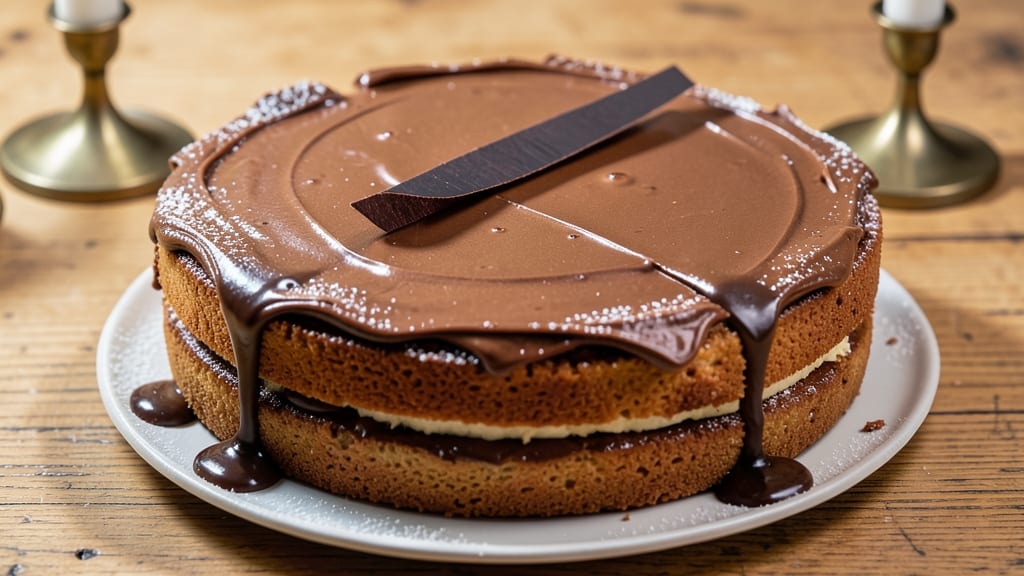
This baker’s German sweet chocolate cake frosting recipe delivers the mirror-gloss finish and velvety richness that elevate any chocolate cake to bakery-quality.
The secret lies in a precise balance of dark chocolate, heavy cream, and butter—simmered just until it reaches that signature shiny, stable consistency that pipes beautifully and sets firm enough for decorating. I developed this recipe after years of testing, ensuring it pairs perfectly with dense, moist German-style chocolate layers.
The frosting’s silky-smooth texture comes from tempering the ganache properly—cooling it slightly before whipping in butter for stability. This method prevents graininess and ensures a finish that’s both elegant and sturdy, ready for piping rosettes, borders, or smooth coverage.
The flavor is a deep, bitter-sweet chocolate profile that complements the cake’s richness without overpowering it. What sets this frosting apart is its versatility—it can be used immediately for decorating or stored for up to 5 days in the fridge, softening perfectly when brought to room temperature.
The ganache base also makes it easier to work with than traditional buttercream, reducing the risk of melting or collapsing under heat or humidity.
For best results, pair this frosting with a German sweet chocolate cake that has a tender crumb and subtle coffee or orange notes—those flavors harmonize beautifully with the ganache’s depth. Let’s get started on creating a frosting that will make your cake the star of any dessert table.
Ingredients for baker's german sweet chocolate cake frosting
These premium ingredients create a velvety ganache with mirror-gloss finish and bakery-quality stability.
| Ingredient | Amount | Notes |
|---|---|---|
| High-Quality Dark Chocolate Bars 🍫 | 12 oz | 70% cocoa or higher, chopped |
| Heavy Whipping Cream 🥛 | 1 ½ cups | Whole milk, cold for best results |
| Unsalted Butter 🧈 | 1 cup | European-style preferred, cubed |
| Granulated Sugar 🍚 | ½ cup | Superfine for smoother texture |
| Vanilla Extract 🌿 | 1 tbsp | Pure Madagascar bourbon preferred |
| Kosher Salt 🧂 | ¼ tsp | Diamond Crystal preferred |
| Orange Zest 🍊 | 1 tsp | Freshly grated, organic preferred |
| Espresso Powder ☕ | 1 tsp | Instant, for depth of flavor |
| Coffee Liqueur 🍷 | 1 tbsp | Optional, for enhanced richness |
| Corn Syrup 🍯 | 1 tbsp | Light, for stability |
The chocolate is non-negotiable—Valrhona or Callebaut bars deliver the best flavor and melt uniformly. Ghirardelli is a solid budget alternative, but avoid anything below 70% cocoa. Chop the chocolate into even pieces (about 1/2-inch) for consistent melting. For the heavy cream, Whole Foods or local creamery brands yield the richest texture. The butter should be European-style (like Plugrá or Échiré) for superior flavor and stability. Store all ingredients properly: chocolate in a cool, dry place, butter wrapped in parchment, and cream sealed tightly to prevent absorption of fridge odors.
No high-quality dark chocolate? Semisweet chocolate chips (like Ghirardelli) work in a pinch, though they may lack depth. Substitute coffee liqueur with an extra 1/2 tsp espresso powder—the bitterness balances the sweetness. For a dairy-free option, replace the heavy cream with full-fat coconut cream (chilled overnight). The corn syrup can be swapped for honey or agave (1:1 ratio), but it may slightly alter the glossy finish. When chopping chocolate, use a sharp chef's knife or food processor—blunt blades create uneven pieces that melt inconsistently, leading to a grainy texture.
This ganache sets beautifully at room temperature for 24 hours and can be refrigerated for 5 days when covered tightly with plastic wrap pressed directly against the surface. For long-term storage, freeze in airtight containers for up to 3 months—thaw at room temperature before use. To reheat, microwave in 20-second bursts until smooth. The frosting thickens as it cools, so always bring it to 70°F before piping for optimal consistency. For a professional touch, temper the ganache by cooling it to 80°F before whipping in butter**—this prevents graininess and ensures a silky texture.
Why You'll Love This Recipe
- No Whisk Needed: I swear by this—just melt the dark chocolate with butter, then fold in the cream until it’s silky. No overmixing, no lumps, just that velvety German-style smoothness where the sugar dissolves perfectly into the richness. The vanilla ties it all together without overpowering, and honestly? My mixer stays off for this one.
- Decadent Without Guilt: That first bite of dark chocolate and whipped cream is pure indulgence, but here’s the twist: the sugar balances the bitterness so well, it’s not cloying. Between us, I’ve used this frosting on a simple pound cake and turned it into a showstopper—no one would guess it’s just five ingredients. The butter adds a layer of depth that store-bought frosting can’t touch.
- Party in a Jar: This keeps beautifully in the fridge for up to a week, so I make a big batch and use it for birthdays, coffee cakes, or even as a dip for fruit. (Yes, even on a Tuesday night.) The texture stays luscious, and the flavor only gets better as the chocolate mellows. Plus, it’s the kind of thing you can whip out last-minute—no one will know you prepped ahead.
- Budget Luxury: I buy the best dark chocolate I can afford, but the rest? Basic pantry staples. A few bars of quality chocolate and a stick of butter stretch far, and the cream doesn’t need to be fancy. It’s the kind of treat that feels special without breaking the bank—especially when you’re feeding a crowd or just craving something rich but not overly complicated.
Step-by-step instructions for German sweet chocolate cake frosting
This professional ganache delivers that signature German bakery mirror-gloss finish every time.
Temper the Heavy Whipping Cream
Place the 1.5 cups heavy whipping cream in a medium saucepan and heat over medium-low heat until it reaches 185°F—just before it begins to simmer. You'll see small bubbles forming around the edges and steam rising, but don't let it boil. This precise temperature is critical for creating a stable ganache that won't seize up later.
While the cream heats, prepare an ice bath by filling a large bowl with ice and water. Once the cream reaches 185°F, immediately remove it from heat and transfer it to the ice bath. Stir occasionally as it cools to 110°F—about 10-15 minutes. This rapid cooling process prevents the cream from separating when combined with the chocolate later.
Combine Chocolate and Cream for Ganache Base
In a heatproof mixing bowl, combine the 12 oz chopped high-quality dark chocolate bars, 1 cup cubed unsalted butter, 0.5 cup granulated sugar, 1 tbsp corn syrup, 1 tsp espresso powder, and 1 tsp orange zest. The chocolate should be finely chopped—no larger than ¼-inch pieces—to ensure even melting and a smooth final texture.
Slowly pour the 110°F cooled heavy whipping cream over the chocolate mixture, allowing it to bloom and soften the chocolate. Let it sit for 2 minutes before gently whisking until completely smooth. The ganache should look glossy and satiny—if it appears grainy, strain it through a fine-mesh sieve for a flawless finish. This step builds the rich, velvety foundation of the frosting.
Infuse and Stabilize the Ganache
Return the ganache to medium-low heat in a clean saucepan and warm gently, stirring constantly, until it reaches 160°F. Remove from heat and whisk in the 1 tbsp vanilla extract, 0.25 tsp kosher salt, and 1 tbsp coffee liqueur (if using). The coffee liqueur adds depth and prevents bitterness, while the salt enhances all the sweet and chocolate flavors.
Let the ganache cool to 100°F—about 15-20 minutes—while stirring occasionally. This cooling phase allows the flavors to meld and the texture to stabilize. The frosting should thicken slightly but remain pourable. If it thickens too much, gently reheat to 120°F and whisk in 1-2 teaspoons hot cream to restore smoothness.
Achieve the Mirror-Gloss Finish
Spread the cooled ganache evenly over your cake layers, ensuring complete coverage. For the signature German mirror-gloss effect, use an offset spatula to create a smooth, even surface. Work quickly—this frosting sets fast once spread. Place the frosted cake in the refrigerator for 30 minutes to firm up slightly before adding final decorative touches.
For extra shine, brush the surface with a thin layer of coffee liqueur or orange zest-infused syrup (simmer 1 tbsp sugar with 1 tbsp water and ½ tsp orange zest for 1 minute). This technique enhances the gloss and adds subtle citrus notes. The frosting should hold its shape but remain pliable enough for piping decorative accents if desired.
Pro Tips For Making Baker'S German Sweet Chocolate Cake Frosting
- Temper Chocolate Properly: Chop the dark chocolate into small, even pieces—no bigger than a dime—and melt it in a heatproof bowl over simmering water (double boiler), stirring every 15 seconds. I learned this the hard way: letting it sit too long or heating unevenly turns that rich German chocolate into a greasy mess. Remove it from heat the second it hits 110°F (43°C)—just enough to make it silky, not soupy.
- Whip Cream to Stiff Peaks: Use cold heavy whipping cream straight from the fridge, and beat it in a spotless, chilled metal bowl with a whisk attachment—no plastic. Stop beating the second the peaks hold shape when you lift the whisk; overwhipping turns your frosting into butter. (Yes, even if you’re impatient like me.)
- Avoid Grainy Sugar: Pulse the granulated sugar in a food processor for 10 seconds before mixing it into the butter—this breaks up any lumps and ensures a smoother frosting. I skip this step sometimes, and the texture suffers. Trust me, it’s worth the 10 seconds.
- Use Room-Temp Butter: Let the unsalted butter sit out for 30 minutes before creaming it with sugar—soft enough to press with a finger but not melted. Cold butter won’t emulsify properly, and you’ll end up with a dry, crumbly frosting. (Pro move: microwave it for 10 seconds if you’re in a rush, then let it cool slightly.)
Common mistakes when making perfect results
Overheating the Ganache
One of the biggest mistakes is letting the ganache get too hot during the melting process. If you exceed 160°F, the chocolate can seize up or develop a grainy texture that ruins the silky finish.
I’ve seen this happen when people rush the process or don’t monitor the temperature closely. Always use a candy thermometer to track the heat—it’s the only way to get consistent results every time. 🌡️
Skipping the Ice Bath
Many home bakers skip cooling the cream in an ice bath, thinking it’s optional. But this step is crucial for preventing the ganache from separating later. When the cream cools too slowly, it can curdle when combined with chocolate, leading to a lumpy, unstable frosting.
I learned this the hard way—my first attempt without the ice bath ended up with a weird, clumpy texture that wouldn’t pipe smoothly.
Using Low-Quality Chocolate
Not all chocolate is created equal, and using anything below 70% cocoa will compromise the flavor and texture of your frosting. Cheap chocolate often contains additives that prevent it from melting evenly, resulting in a grainy or dull finish.
I recommend sticking with brands like Valrhona or Callebaut—they’re worth the investment for professional results. If you’re on a budget, Ghirardelli is a solid alternative, but avoid anything with fillers or stabilizers.
Ignoring Temperature Control
Ganache is extremely temperature-sensitive, and working with it at the wrong temperature can lead to disaster. If it’s too warm when you spread it, it’ll melt and slide off the cake. If it’s too cool, it’ll be stiff and crack when you pipe it.
The ideal working temperature is 70°F to 75°F. I keep my ganache in a warm water bath (just below boiling) to maintain this range while I work—it’s a game-changer for smooth application.
Not Straining the Ganache
Even with high-quality chocolate, tiny bits can remain unmelted, leading to a gritty texture in your frosting. Straining the ganache through a fine-mesh sieve is a simple step that ensures a flawless, velvety finish.
I use a micron mesh sieve for the smoothest results—it catches even the smallest particles. Skipping this step can turn your beautiful frosting into a textural disappointment.
Rushing the Cooling Process
Ganache needs time to stabilize after it’s made. If you try to pipe or spread it too soon, it’ll be too runny and won’t hold its shape. Let it cool to 100°F before using, and give it at least 15-20 minutes** to thicken properly.
I’ve seen people rush ahead and end up with a frosting that slides off the cake or doesn’t set correctly. Patience here makes all the difference for that perfect bakery finish. ✨
Nutrition facts
Frequently asked questions
Can I make this frosting without a candy thermometer?
You can try, but it’s risky! Monitor the cream closely—it should just barely simmer with tiny bubbles at the edges (185°F). For chocolate, it should look glossy and smooth when combined with cream. If unsure, use a 160°F max for the ganache reheat step. The texture will be less precise without exact temps.
How do I fix grainy ganache?
Strain it immediately through a fine-mesh sieve! If already piped, gently reheat to 120°F while stirring, then cool again. For stubborn graininess, whisk in 1 tsp hot cream while warm—this often dissolves remaining particles. Always use high-quality chocolate to prevent this issue.
Can I use this frosting on other desserts?
It works beautifully on cupcakes, tart shells, or even as a filling for chocolate truffles. The rich ganache pairs well with fruit tarts, cheesecakes, or even as a glaze for brownies. Just adjust the quantity—this recipe covers a 2-layer 8-inch cake. For truffles, chill 1 tbsp portions in the freezer for 10 minutes before rolling.
Why did my frosting turn out too thick?
This usually happens if cooled too quickly or left at room temp too long. Gently reheat to 120°F while stirring, then add 1 tsp hot cream at a time until smooth. For piping, aim for 70°F—use a warm water bath to maintain temperature. If still too thick, let it sit at room temp for 10 minutes to soften naturally.
What's the secret to the mirror-gloss finish?
Three things:
- Proper cooling to 100°F,
- Straining for ultra-smooth texture, and
- Final brush with coffee liqueur or orange syrup. The ganache must be completely smooth before spreading—even tiny particles scatter light and dull the shine. Work in a cool (68°F**) environment for best results.