
Desserts
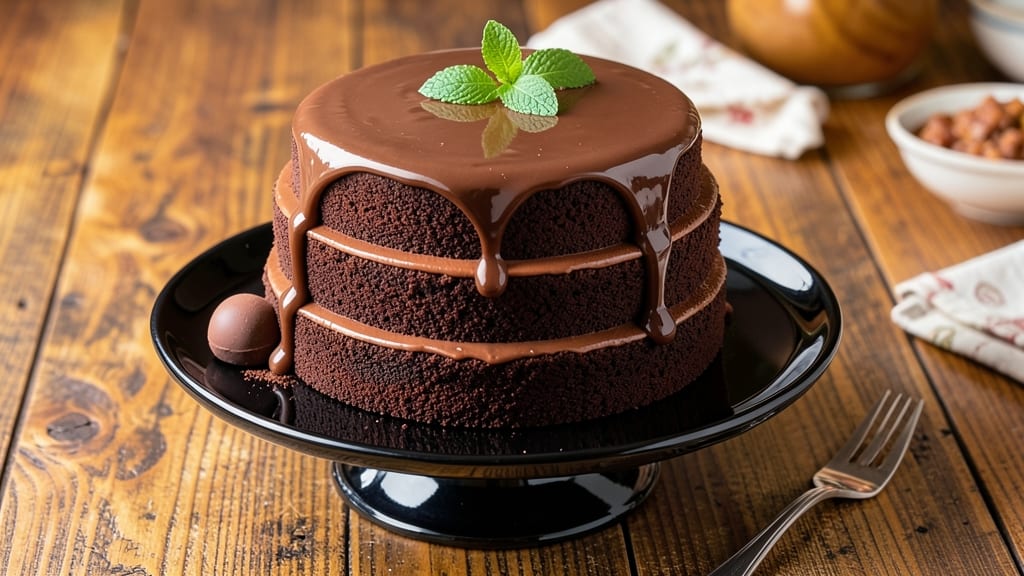
Big Al's chocolate cake recipe delivers moist, fudgy layers with a signature crunchy pecan crown that becomes the star of any dessert table. 💛 The secret lies in a precise balance of buttermilk and melted butter, creating a tender crumb that stays rich and velvety for days.
I’ve baked this version countless times for gatherings—it’s the one people always ask for seconds on.
What sets this cake apart is the pecan crown—a buttery, toasted pecan topping that adds both texture and visual drama.
The recipe uses a simple two-layer approach, but the real magic happens in the baking process: a 350°F oven for even heat distribution and a toothpick test that guarantees perfect doneness. No one will guess it’s not from a bakery.
The result is a cake with deep chocolate flavor and a crunchy-sweet crown that holds together beautifully. Whether you frost it with classic buttercream, rich chocolate ganache, or leave it as-is for a rustic finish, this recipe delivers restaurant-quality dessert every time.
The layers stay moist for up to five days when stored properly.
Perfect for birthdays, holidays, or just because—this cake is the kind that makes you look like a pro. Let’s get baking!
Ingredients for big al's chocolate cake
Twelve essential ingredients crafting restaurant-quality chocolate cake with a signature pecan crown.
| Ingredient | Amount | Notes |
|---|---|---|
| All-Purpose Flour 🌾 | 3 ½ cups | Sifted for even texture |
| Unsalted Butter 🧈 | 2 ½ cups | Melted and cooled to room temperature |
| Granulated Sugar 🍚 | 2 ½ cups | Light brown preferred for depth |
| Buttermilk 🥛 | 1 ½ cups | Fresh for optimal tang |
| Large Eggs 🥚 | 4 whole | Room temperature for even baking |
| Unsweetened Cocoa Powder 🍫 | ¾ cup | Natural or Dutch-processed |
| Baking Soda 🧂 | 1 tsp | Freshly measured |
| Salt 🧂 | ½ tsp | Diamond Crystal preferred |
| Espresso Powder ☕ | 1 tbsp | Enhances chocolate depth |
| Vanilla Extract 🌿 | 2 tsp | Pure Madagascar preferred |
| Pecans 🥜 | 3 cups | Chopped, toasted for flavor |
| Light Brown Sugar 🍚 | 1 cup | Packed for pecan crown |
| Granulated Sugar (for crown) 🍚 | ½ cup | Fine texture preferred |
| Melted Butter (for crown) 🧈 | ½ cup | Cooled slightly before mixing |
| Vanilla Extract (for crown) 🌿 | 1 tsp | Same as cake layer |
The flour and cocoa powder are the foundation—King Arthur flour or Dutch-processed cocoa like Valrhona elevate the final product. For the buttermilk, grab organic from the dairy case at Whole Foods—it adds that signature tang. Pecans should be raw, unsalted, and toasted to a golden brown before chopping (I use a food processor for even pieces). The espresso powder is non-negotiable—it deepens the chocolate flavor without tasting like coffee. If you're short on time, Starbucks espresso powder works in a pinch, but Lavazza is the gold standard.
No buttermilk? Substitute with 1.5 cups milk + 1.5 tbsp vinegar (let it sit 5 minutes). Dutch-processed cocoa can be swapped for natural cocoa, but add 1 tsp baking soda to balance. For the pecan crown, walnuts work in a bind, but texture suffers. Brown sugar in the crown can be replaced with white sugar + 1 tsp molasses for depth. The vanilla extract must be pure—imitation vanilla will leave a chemical aftertaste. If you're gluten-sensitive, King Arthur gluten-free flour blend replaces the all-purpose flour at a 1:1 ratio, but texture will differ slightly.
Store baked layers wrapped in plastic at room temperature for 2 days or refrigerate for up to 5 days. The pecan crown keeps best at room temperature in an airtight container for 3 days. For longer storage, freeze layers (unfrosted) for up to 3 months—thaw overnight in the fridge before frosting. Frosted cakes freeze beautifully for 2 months, but bring to room temperature before serving. Pro tip: Toast extra pecans for garnish—they add freshness to every slice.
Why You'll Love This Recipe
- Pantry Staples Only: The ingredients? Things I already have. Flour, butter, sugar—no specialty items, no last-minute grocery runs. Even the buttermilk? Just milk and vinegar if you’re out. Honestly, this cake is my go-to when I’m too tired to shop.
- Rich Without Effort: That buttermilk-soaked batter with melted butter? It’s ridiculously moist—no dry crumbs here. The eggs bind it just right, and the sugar caramelizes enough to give it that deep, fudgy satisfaction without needing extra chocolate chips or mix-ins.
- Birthday to Breakfast: Slice it for a celebration, pack it for lunch, or just grab a fork at midnight. Between us, I’ve had it warm with ice cream, cold with coffee, and even as a quick snack after a long day. It holds up—no sad, crumbly texture the next day.
- Budget-Friendly Luxury: A single cake feeds six, and leftovers? They disappear fast. The butter and sugar make it feel special, but the cost adds up to way less than store-bought. Plus, the flour and eggs stretch my grocery budget without sacrificing taste. My secret weapon for treating myself cheaply.
Step-by-step instructions for big Al's chocolate cake
Master this two-layer technique for a fudgy center and perfectly moist crumb.
👨🍳 Step 1: Prepare the Cake Batter with Precision
Preheat your oven to 350°F and grease two 9-inch round cake pans with nonstick spray, then line the bottoms with parchment circles. Sift the 3.5 cups all-purpose flour with the 1 tsp baking soda and 0.5 tsp salt into a medium bowl to eliminate lumps—this ensures your cake rises evenly.
In a separate large bowl, cream the 2.5 cups unsalted butter and 2.5 cups granulated sugar on medium speed until light and fluffy, about 3-4 minutes. The mixture should nearly double in volume and turn pale. This aeration creates the signature tender crumb. Add the 4 whole large eggs, one at a time, mixing well after each addition. Scrape down the sides of the bowl to ensure all ingredients are fully incorporated.
👨🍳 Step 2: Combine Wet Ingredients and Fold in Dry Components
In a small bowl, whisk together the 1.5 cups buttermilk, 2 tsp vanilla extract, and 1 tbsp espresso powder. The espresso powder deepens the chocolate flavor without adding coffee taste—trust me, it makes a difference. Gradually add this mixture to the butter-sugar-egg combination while mixing on low speed.
Sift in the 0.75 cup unsweetened cocoa powder and mix on low speed just until combined. Avoid overmixing—you should still see small flour streaks. The goal here is to maintain a light, airy texture. If the batter looks too thick, add 1-2 tablespoons of buttermilk to reach a smooth, pourable consistency. This is your secret to that signature moist crumb.
🥘 Step 3: Bake the Layers to Perfect Doneness
Divide the batter evenly between the prepared cake pans, filling them about two-thirds full. Bake for 30-35 minutes or until a toothpick inserted in the center comes out with moist crumbs but no wet batter. Rotate the pans halfway through baking for even browning. The edges should be set but the tops should still look slightly soft—this prevents a dry cake.
Remove the cakes from the oven and let them cool in their pans for 10 minutes. Then transfer them to a wire rack to cool completely. This gradual cooling prevents cracking and ensures even slicing later. While the cakes cool, toast the 3 cups pecans in a dry skillet over medium heat for 5-7 minutes until golden and fragrant—this enhances their natural sweetness for the crown.
🍳 Step 4: Assemble the Pecan Crown Mixture
In a medium bowl, combine the toasted pecans, 1 cup light brown sugar, 0.5 cup granulated sugar (for crown), 0.5 cup melted butter (for crown), and 1 tsp vanilla extract (for crown). Mix until the pecans are evenly coated and the mixture forms a thick, sticky paste. This crown should be firm enough to hold its shape when pressed onto the cake layers.
Spread a thin layer of the pecan mixture on top of one cake layer, then place the second layer on top. Press gently to create a level surface. Spoon the remaining pecan mixture around the edges of the cake, building up a decorative crown that encircles the entire top and sides. Use a spatula to smooth the edges and create clean lines. Chill the assembled cake in the refrigerator for at least 2 hours before serving.
Pro Tips For Making Big Al'S Chocolate Cake
- MELT THE BUTTER SLOW: Mixing cold butter into the flour creates a dry, crumbly mess. Warm the butter to room temp (about 65°F) first—just soft enough to press a finger into it, not liquid. This ensures a smoother batter that bakes evenly, not a cake that fights you every step.
- WHISK EGGS UNTIL THICK: Don’t just crack and stir the eggs—whisk them until they’re noticeably thicker and paler. This incorporates air, which lightens the cake and prevents a dense, heavy texture. I learned this the hard way after a batch turned out like a brick.
- STOP WHEN THE CENTER JIGGLES: The recipe might say "25-30 minutes," but your oven’s hot spots lie. Pull the cake when the edges are set but the center still wobbles slightly—it’ll firm up as it cools. Overbaking dries out the crumb and turns it into a sad, cracked mess.
- USE BUTTERMILK STRAIGHT FROM THE FRIDGE: Let the buttermilk sit out for at least 30 minutes before mixing—cold buttermilk curdles when combined with warm eggs and butter, ruining the batter. If you’re in a rush, chill the bowl first to slow the reaction, but don’t skip this step entirely.
Troubleshooting perfect results
Cracked Cake Layers
If your cake layers crack during baking or cooling, it’s usually due to uneven heat distribution or sudden temperature changes. Always preheat your oven to 350°F for at least 15 minutes before baking. I also recommend rotating the pans halfway through baking to ensure even browning.
Let the cakes cool in their pans for 10 minutes before transferring to a wire rack—this gradual cooling prevents cracks. If cracks still appear, try brushing the tops with a thin layer of simple syrup before assembling. 💡
Dense or Dry Cake
A dense or dry cake often results from overmixing the batter or using old ingredients. Mix the batter just until combined—you should still see small flour streaks. For moisture, ensure your buttermilk is fresh and your butter is at room temperature.
If the cake turns out dry, try adding 1-2 tablespoons of buttermilk to the batter or brushing the layers with a simple syrup (equal parts sugar and water, heated until dissolved) before frosting. 🌱
Pecan Crown Too Soft
The pecan crown should hold its shape but still be firm enough to support the cake. If it’s too soft, your butter might not be cool enough when mixing. Let the melted butter for the crown cool to 70°F before combining with the other ingredients.
For extra stability, chill the crown mixture in the fridge for 15-20 minutes before assembling. If it’s still too soft, add 1-2 tablespoons of flour to help bind it together. 🥜
Uneven Baking
Uneven baking can happen if your oven isn’t calibrated or if the cake pans aren’t level. Always place your pans on the middle rack of the oven and avoid opening the door during the first 20 minutes of baking. If your oven runs hot, reduce the temperature by 10-15°F.
For even browning, I also recommend using two identical 9-inch round cake pans and rotating them halfway through baking. A simple trick: Place a baking sheet on the lower rack to reflect heat upward. 🔥
Frosting Won’t Stick
If your frosting won’t adhere to the cake layers, it’s likely because the layers aren’t level or the cake isn’t fully cooled. Always level the cake layers with a serrated knife before frosting.
Let the cake cool completely at room temperature before applying frosting—this ensures the layers are firm enough to hold the weight. For extra grip, brush the cake layers with a thin layer of apricot jam or simple syrup before frosting.
Chill the cake for 30 minutes after frosting to help it set. ✨
Pecans Burn Quickly
Toasted pecans can burn fast if the heat is too high. Toast them in a dry skillet over medium heat and stir frequently to prevent burning. For even toasting, spread the pecans in a single layer and watch closely—they’re done when they’re golden brown and fragrant, about 5-7 minutes.
If they start to darken too quickly, remove them from the heat and let them cool on a wire rack. For extra flavor, add a pinch of sea salt while they toast. 💛
Nutrition facts
Frequently asked questions
Can I make this cake in a different pan size?
Yes, but adjust the baking time. For 8-inch pans, bake 25-30 minutes and for 10-inch pans, bake 35-40 minutes. The key is to check doneness with a toothpick—it should come out with moist crumbs. The batter volume remains the same, but the thickness changes.
What's the best frosting for this cake?
Classic buttercream or chocolate ganache work beautifully. For buttercream, use 1 cup softened butter, 4 cups powdered sugar, and 2 tbsp cocoa powder. For ganache, mix 1 cup heavy cream with 8 oz chopped chocolate, then cool slightly before spreading. The pecan crown pairs perfectly with both!
How do I store leftovers?
Wrap the unfrosted cake layers tightly in plastic wrap and store at room temperature for 2 days. For longer storage, refrigerate for up to 5 days or freeze for 3 months. Frosted cakes keep 3 days refrigerated or 2 months frozen. Always bring to room temperature before serving.
Can I substitute pecans in the crown?
Yes! Try walnuts or almonds for a different texture, but toast them first. For a sweeter crown, add 1/4 cup chopped dates or 1/2 cup chocolate chips. The key is to maintain the same ratio of nuts to sugar—about 3 cups nuts to 1.5 cups sugar in the mixture.
Why does the cake sink in the middle?
This usually happens from overmixing or opening the oven door too early. Mix just until combined—small flour streaks are normal. Avoid opening the oven during the first 20 minutes of baking. If it sinks slightly, the simple syrup trick (brushing layers before frosting) will help restore moisture.