
Desserts
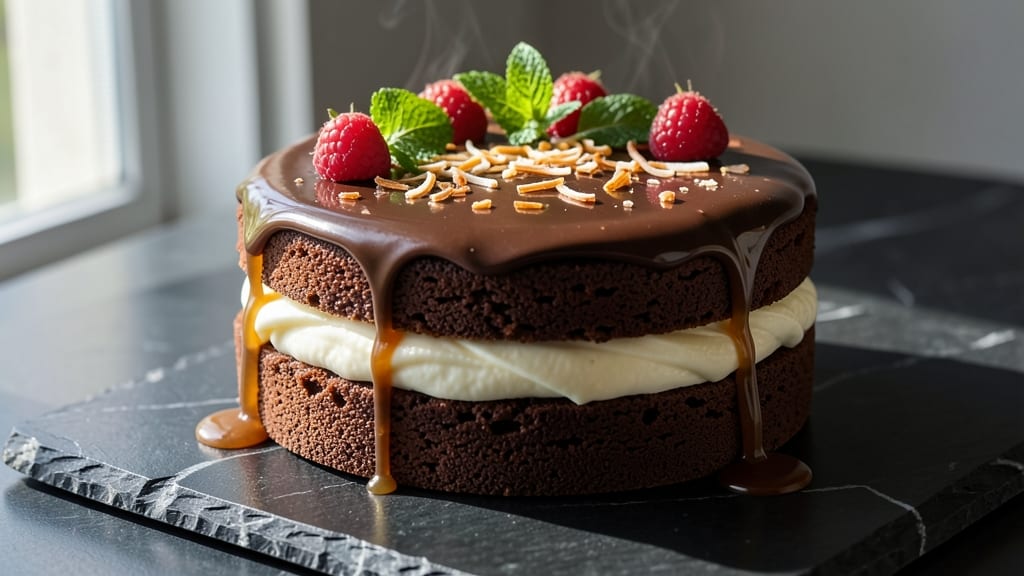
This Bounty chocolate cake recipe delivers the perfect balance of rich chocolate layers and creamy coconut rivers that taste like the iconic candy bar.
The secret lies in a moist cake base that holds up to generous fillings, paired with a velvety ganache that mimics the texture of melted Bounty bars. I've perfected this recipe over years of testing, ensuring every slice delivers that nostalgic coconut-chocolate experience without the mess of actual candy.
The cake itself is tender yet sturdy enough to support layers of chocolate ganache and chopped Bounty bars, creating rivers of coconut cream that ooze with every bite. What makes this recipe approachable is the simple technique—no fancy equipment, just precise measurements and patience during the chilling stages.
The ganache is made with just two ingredients (chocolate and coconut cream), making it foolproof for beginners.
By the time you assemble the cake, you'll have layers of moist chocolate cake, pockets of gooey coconut cream, and a glossy chocolate ganache that ties everything together. The contrast between the dense cake and light coconut filling creates a texture that's both satisfying and indulgent.
This dessert is perfect for celebrations or when you simply need a treat that feels like a hug in cake form.
Ready in just 30 minutes of active time (plus chilling), this recipe scales beautifully for parties or personal cravings. The key to success is letting the cake cool completely before assembling—this prevents soggy layers and ensures clean slices. Let's get baking!
Ingredients for bounty chocolate cake
Rich chocolate layers and velvety coconut cream rivers start with these precise ingredients.
| Ingredient | Amount | Notes |
|---|---|---|
| Unsalted Butter 🧈 | 1 ½ cups | Softened to room temperature |
| Granulated Sugar 🍚 | 2 ½ cups | Superfine preferred for smoothness |
| Light Brown Sugar 🍚 | ½ cup | Packed firmly for accuracy |
| Large Eggs 🥚 | 4 whole | Room temperature for even mixing |
| All-Purpose Flour 🌾 | 2 ½ cups | Sifted before measuring |
| Unsweetened Cocoa Powder 🍫 | ¾ cup | Natural or Dutch-processed |
| Baking Powder 🧂 | 1 ½ tsp | Diamond Crystal preferred |
| Salt 🧂 | ½ tsp | Fine sea salt |
| Vanilla Extract 🌿 | 2 tsp | Pure Madagascar bourbon |
| Whole Milk 🥛 | 1 cup | Room temperature |
| Dark Chocolate Bars 🍫 | 12 oz | 70% cocoa, chopped fine |
| Coconut Cream 🥥 | 1 cup | Chilled overnight for thickness |
| Bounty Candy Bars 🍫 | 12 whole | Chopped into 1/2-inch pieces |
| Powdered Sugar 🍚 | 1 cup | For dusting layers |
The chocolate and cocoa powder are non-negotiable for that deep, fudgy flavor. Ghirardelli 70% dark chocolate bars melt beautifully, but any high-quality bar with 60-70% cocoa works. For the cocoa powder, Dutch-processed gives a smoother texture, while natural cocoa adds intensity. The coconut cream is critical—store-bought or homemade from chilled coconut milk both work, but it must be thick. If your store doesn't carry coconut cream, chill a can of coconut milk overnight and scoop out the thick cream that separates. The Bounty bars? Full-size, not the mini versions—they hold their shape better during baking.
No powdered sugar? Superfine sugar sifted through a sieve works in a pinch, though it won't be as light. Running out of vanilla? Almond extract at half the amount adds depth, but the flavor will differ slightly. The milk can be swapped for heavy cream for extra richness, but whole milk keeps the cake tender. For the ganache, if you can't find coconut cream, chilled coconut milk blended with 1 tbsp cornstarch thickens beautifully. And if you're worried about the cake being too dense, fold in 1 tbsp whipped egg whites at the end for lift—just don't overmix.
Butter and eggs should be at room temperature before mixing to ensure even distribution. Store butter in the fridge until ready to use, then let it sit for 1-2 hours. The cake layers keep well for 3 days at room temperature if wrapped tightly in plastic, but they're best assembled and served immediately. The ganache can be made 1 day ahead and stored at room temperature, though it thickens slightly—just reheat gently with a splash of coconut cream. For parties, assemble the cake 2 hours before serving to let the coconut rivers fully set, but don't refrigerate or they'll firm up too much.
Why You'll Love This Recipe
- No Mixer Needed: I swear by this—just a bowl and a spatula. The butter and sugars cream together like magic when you work them fast, and the eggs fold right in without a trace of lumps. No electric mess, no fuss.
- Coconut-Chocolate Magic: That buttery Bounty filling swirled into rich chocolate cake? It’s like a grown-up dessert hug. The brown sugar keeps it moist, while the eggs give it that perfect, fudgy bite—not too sweet, not too dense.
- Birthday or Boredom: Honestly, I’ve pulled this out for both. The cake’s sturdy enough for a crowd but feels special enough for a quiet night in. Add whipped cream, and it’s a no-brainer for any celebration (or just because).
- Leftovers? Even Better: Between us, the cake tastes better the next day—crust slightly firmer, filling more concentrated. I slice it into squares, wrap them tight, and they stay fresh for days. Budget win: one cake feeds twice.
Step-by-step instructions for Bounty chocolate cake
Here's how to create a decadent cake with rich chocolate layers and creamy coconut rivers.
Cream Butter and Sugars Together
In a stand mixer fitted with the paddle attachment, beat the 1.5 cups unsalted butter on medium speed until smooth and creamy, about 2-3 minutes. This ensures the butter incorporates air for a lighter texture. Gradually add the 2.5 cups granulated sugar and 0.5 cup light brown sugar, mixing continuously until the mixture becomes pale and fluffy, typically 3-4 minutes.
Scrape down the sides of the bowl to ensure even mixing. The sugar should be fully incorporated, leaving no grainy texture. This step is crucial for achieving that tender, moist crumb the cake is known for. If using superfine sugar, the mixture will blend more quickly and smoothly.
Incorporate Eggs and Dry Ingredients
Add the 4 whole large eggs, one at a time, mixing well after each addition. The mixture should thicken slightly with each egg. Stir in the 2 tsp vanilla extract until fully combined. In a separate bowl, whisk together the 2.5 cups all-purpose flour, 0.75 cup unsweetened cocoa powder, 1.5 tsp baking powder, and 0.5 tsp salt.
Gradually add the dry ingredients to the butter-sugar mixture, alternating with the 1 cup whole milk. Begin and end with the flour mixture to ensure even distribution. Mix on low speed just until combined—overmixing can lead to a dense cake. The batter should be smooth and slightly thick, resembling pudding.
Prepare the Chocolate and Bounty Filling
In a microwave-safe bowl, melt the 12 oz dark chocolate bars in 30-second intervals, stirring between each interval until fully melted and smooth. Stir in the 1 cup chilled coconut cream until well combined. In another bowl, chop the 12 whole Bounty candy bars into ½-inch pieces. Set aside.
Divide the cake batter evenly between two 8-inch round cake pans lined with parchment paper. Bake at 350°F for 25-30 minutes, or until a toothpick inserted into the center comes out clean. While the cakes cool, spread the chocolate-coconut mixture evenly over one of the cooled cake layers.
Assemble and Frost the Cake
Place the chocolate-coconut mixture layer on a serving plate. Top with the second cake layer, pressing gently to adhere. Dust the top and sides of the cake with 1 cup powdered sugar using a fine-mesh sieve for an elegant finish. Arrange the chopped Bounty pieces decoratively around the edges or on top for a festive touch.
Serve immediately or refrigerate for up to 2 hours before serving to allow the coconut cream to set slightly. The cake should have a moist, fudgy texture with rivers of rich coconut cream melting through each bite. Enjoy with a dollop of whipped cream or a scoop of vanilla ice cream for extra indulgence.
Pro Tips For Making Bounty Chocolate Cake
- Melt Butter Slowly: I learned this the hard way—dumping cold butter into hot sugar makes a greasy mess that won’t emulsify properly. Warm the butter in the microwave for 20-30 seconds first, then whisk it into the sugars until smooth. That creamy texture is what keeps your cake tender, not dense.
- Sift the Flour Twice: This isn’t the prettiest method, but it’s the tastiest. After mixing your wet ingredients, sift the flour again before folding it in—even if it looks fine. The first sift removes lumps, the second ensures even distribution, which prevents a grainy texture. (Yes, even if you’re impatient like me.)
- Bake Until Slightly Under: Your cake will look done at 325°F, but resist pulling it out when the edges pull away. The center should still jiggle just a little—like a wobbly Jell-O. Overbaking dries out the coconut layers, and nobody wants a crumbly Bounty cake.
- Swap Brown Sugar for White: I skip this when I’m lazy, but the dish is noticeably better when I don’t. Replace half the light brown sugar with granulated white sugar for a sharper chocolate flavor and a lighter crumb. The moisture stays in longer, too—trust the process.
Pro cooking tips for great bounty chocolate cake
Butter Temperature
Room-temperature butter is non-negotiable for this cake—it blends smoothly and creates air pockets for a lighter texture. Take your butter out of the fridge 1-2 hours before baking. If you're in a rush, place the sealed package in warm water for 10-15 minutes while you prep other ingredients.
Cold butter won't mix properly, leading to dense layers. I like to test it by pressing a finger into the butter—if it leaves an indentation, it's ready. 🧈
Baking Powder
Use Diamond Crystal baking powder (not aluminum-free brands) for the best rise—it's more potent and gives that classic tender crumb. Measure carefully: 1.5 teaspoons packed into a level measuring spoon. If your recipe calls for "1 tablespoon," that's 3 teaspoons of Diamond Crystal.
Pro tip: Store baking powder in the freezer to preserve freshness. Stale baking powder won't lift your cake properly.
Coconut Cream
Thick, chilled coconut cream is the secret to those dreamy rivers. If your store doesn't carry it, make your own by chilling a can of coconut milk overnight—just scoop out the solid cream that separates from the liquid.
For extra richness, blend 1 cup coconut cream with 1 tablespoon cornstarch before heating to thicken it further. Never use coconut milk straight from the can—it's too thin and won't create those luscious pockets. 🥥
Bounty Bar Prep
Chop the Bounty bars into ½-inch pieces for even distribution and easy melting during baking. Use a sharp chef's knife or food processor for clean cuts. For a smoother texture, pulse the chopped pieces briefly in a food processor before adding them to the cake.
If you're short on time, microwave the chopped Bounty pieces for 10 seconds before assembling—they'll soften slightly and blend better into the ganache.
Chilling Stages
Let the cake layers cool completely in the pan for 15 minutes before transferring to a wire rack. This prevents cracking when you remove them. Once fully cooled, refrigerate the assembled cake for at least 2 hours before slicing—this lets the coconut cream set slightly for cleaner cuts.
For parties, assemble the cake 4-6 hours ahead and store it uncovered at room temperature. The flavors deepen as it sits! ❄️
Ganache Tricks
For a silky ganache, melt the chocolate in 30-second bursts in the microwave, stirring between each interval. Overheating causes "chocolate hands" (seized chocolate). To fix a thick ganache, whisk in 1 teaspoon coconut cream at a time until smooth.
If it's too thin, chill it for 10 minutes and re-whisk. For extra shine, brush the assembled cake with 1 tablespoon coconut cream before dusting with powdered sugar—it adds a glossy finish that looks restaurant-worthy.
Nutrition facts
Frequently asked questions
Can I substitute Bounty bars with other coconut candies?
Yes, but the texture and flavor will differ slightly. For a similar coconut experience, try chopped Coconut Layers bars or Tootsie Roll coconut candies. If you prefer a chocolate-only version, replace the Bounty with extra chopped dark chocolate. For a tropical twist, use coconut macaroons (crushed) or coconut cream pie filling—just adjust the ganache ratio to maintain moisture balance.
Why does my cake turn out dense instead of moist?
Overmixing the batter or underbaking are the most common culprits. Mix just until combined (the batter should look like pudding), and bake until a toothpick comes out with moist crumbs (not wet batter). Also ensure your butter and eggs are at room temperature—cold ingredients prevent proper emulsification. For extra moisture, brush the cooled layers with 2 tablespoons coconut cream before assembling.
How do I make this cake ahead of time?
Assemble the cake 24 hours ahead and store it at room temperature, covered loosely with plastic wrap. The coconut cream will thicken slightly but remains delicious. For longer storage (3 days), wrap each layer individually in plastic and refrigerate. Bring to room temperature before serving. Pro tip: Freeze the unassembled cake layers (wrapped tightly) for up to 1 month—thaw at room temperature before adding filling.
Can I use a boxed cake mix for this recipe?
Not recommended—boxed mixes lack the richness and moisture needed for this technique. However, you can adapt a high-quality chocolate cake mix (like Betty Crocker Supreme) by adding ½ cup extra cocoa powder, ¼ cup melted butter, and ¼ cup coconut cream to the dry ingredients. Replace the milk with ½ cup coconut milk for authenticity. The texture won't be identical, but it'll be closer!
What's the best way to slice clean layers?
Chill the assembled cake for 2 hours before slicing—this firms up the coconut cream for cleaner cuts. Use a hot knife (dip in hot water, wipe dry) for the first cut, then switch to a clean, cool knife. For extra precision, freeze the cake for 30 minutes before slicing. Serve immediately after cutting to enjoy the gooey rivers at their best!