
Desserts
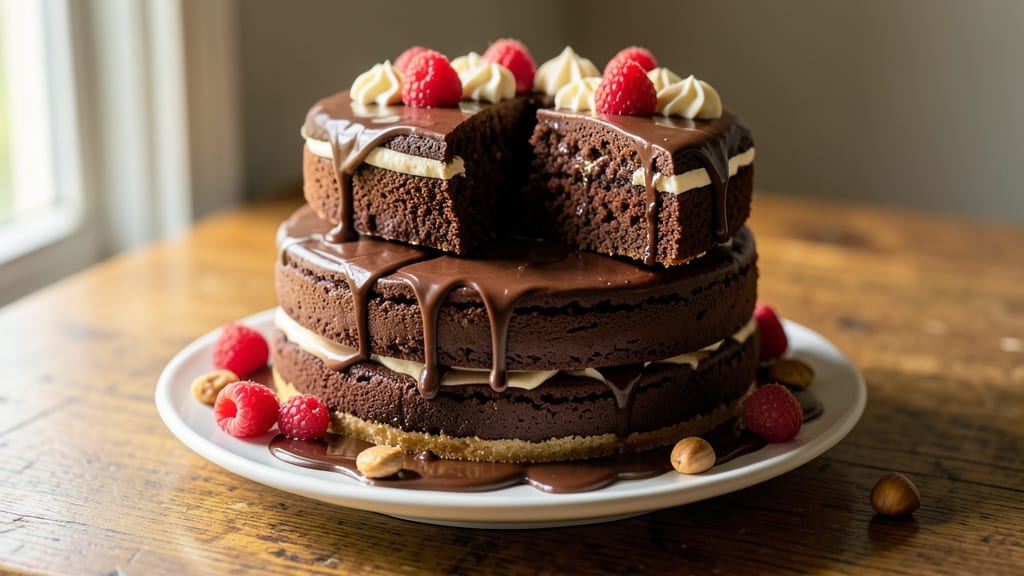
This Callebaut chocolate cake recipe delivers moist, fudgy layers swirled with rich chocolate ganache—perfect for special occasions or satisfying chocolate cravings. 💛 The secret lies in using premium Callebaut chocolate, which melts into velvety perfection without graininess, creating a texture that’s impossibly tender yet sturdy enough to hold layers of decadence.
What sets this recipe apart is the balance of ingredients: buttermilk tenderizes the crumb while brown sugar adds caramel depth, and a touch of espresso powder enhances the chocolate’s intensity.
The fudge swirl isn’t just decorative—it’s the heart of the cake, ensuring every bite delivers that signature chocolatey richness you crave.
By the time it emerges from the oven, you’ll have a cake with golden-brown edges and a crackly top, hiding layers of moist, fudgy goodness. The ganache swirls remain glossy and decadent, cutting through the cake’s density with every forkful.
This is the kind of dessert that makes guests ask for seconds—and you’ll want to keep a slice for yourself.
Serve it warm with vanilla ice cream or dusted with powdered sugar for a bakery-style finish. The recipe scales easily for parties, and leftovers stay moist for days when stored properly. Let’s bake this showstopper!
Ingredients for callebaut chocolate cake
Premium chocolate meets buttery layers—eight ingredients crafting bakery-style decadence.
| Ingredient | Amount | Notes |
|---|---|---|
| Premium Callebaut Chocolate (70% Cocoa) 🍫 | 8 oz | High-quality, finely chopped |
| All-Purpose Flour 🌾 | 2 ½ cups | Sifted, spooned lightly |
| Granulated Sugar 🍚 | 2 cups | Standard white sugar |
| Packed Brown Sugar 🍯 | 1 cup | Light or dark variety |
| Buttermilk 🥛 | 1 ½ cups | Room temperature preferred |
| Unsalted Butter 🧈 | 1 ½ cups | Cold, cubed for creaming |
| Large Eggs 🥚 | 4 whole | Room temperature, separated |
| Vanilla Extract 🌸 | 2 tsp | Pure, high-quality extract |
| Instant Espresso Powder ☕ | 1 tbsp | Enhances chocolate depth |
| Baking Powder 🧂 | 1 ½ tsp | Diamond Crystal preferred |
| Salt 🧂 | ½ tsp | Fine sea salt |
| Heavy Cream 🥛 | 1 ½ cups | Cold for ganache |
| Powdered Sugar 🍚 | 1 cup | For dusting and ganache |
The Callebaut chocolate is non-negotiable here. Valrhona or Callebaut 70% cocoa melts into velvety perfection without graininess, which is critical for the fudge swirl. Buy it in blocks from specialty stores like Williams Sonoma or Sur La Table—the difference in texture is night-and-day compared to grocery store brands. Chop it yourself with a serrated knife for even distribution. The butter should be cold and cubed when creaming; room temperature butter creates dense layers. For buttermilk, if you forget to culture it, mix 1.5 tablespoons lemon juice or vinegar with 1.5 cups milk and let sit for 5 minutes.
Substitutions are limited with this recipe—quality matters most. No instant espresso powder? Cold brew concentrate at half the amount works, but the flavor profile shifts slightly. For powdered sugar, granulated sugar processed in a blender is a fine alternative, though it won’t be as fine. The heavy cream for ganache can be substituted with full-fat coconut cream, but it will alter the texture slightly. If you’re short on brown sugar, maple syrup at half the amount adds moisture but changes the caramel notes. For the espresso powder, strong brewed coffee cooled can replace it, but the cake won’t have the same depth. Always use unsalted butter—salted butter throws off the delicate balance of flavors.
Store the cake layers wrapped tightly in plastic wrap at room temperature for up to 3 days before assembling. The ganache keeps well in the fridge for 5 days, but bring it to room temperature before using. Once assembled, the cake stays moist for 4-5 days when refrigerated. For longer storage, wrap the fully assembled cake in plastic and freeze for up to 3 months. Thaw overnight in the fridge before serving. To prevent a soggy bottom, bake the cake in two 8-inch rounds rather than one large sheet pan—this ensures even baking and a perfect crumb.
Why You'll Love This Recipe
- Here’s what sold me: the brown sugar adds depth, but the Callebaut’s bitterness balances it perfectly. It’s not cloyingly sweet—more like a grown-up treat that still feels indulgent. (Yes, even on a Tuesday night.)
- No-Fuss Mixing: I swear by this recipe because it’s one bowl, no fuss. Just cream butter and sugars, toss in the melted Callebaut chocolate (that 70% cocoa? Chef’s kiss), and fold in the wet ingredients—no sifting, no extra bowls. The buttermilk keeps it tender without overworking the batter.
- Rich Without Overpowering: Here’s what sold me: the brown sugar adds depth, but the Callebaut’s bitterness balances it perfectly. It’s not cloyingly sweet—more like a grown-up treat that still feels indulgent. (Yes, even on a Tuesday night.)
- Leftovers That Last: This cake stays moist for days, which means I can bake it once and enjoy slices for breakfast with coffee or as a midnight snack. The buttermilk keeps it from drying out, and the chocolate flavor only gets better as it sits.
Step-by-step instructions for Callebaut chocolate cake
Master the art of ultra-moist chocolate cake with professional techniques and precise timing.
👨🍳 Step 1: Prepare the Chocolate Fudge Swirl
In a medium saucepan, combine the 8 oz Premium Callebaut Chocolate (70% Cocoa), 1.5 cups Heavy Cream, and 1 cup Powdered Sugar. Place over medium heat and stir constantly until the chocolate melts completely and the mixture reaches 160°F. You'll know it's ready when it's smooth and glossy with a fudge-like consistency—this will become your decadent swirl.
Remove from heat and let cool for 10 minutes while you prepare the cake batter. The mixture should thicken slightly but remain pourable. If it sets too quickly, gently reheat for 15 seconds to restore smoothness. This fudge swirl is what makes this cake truly special—don't rush this step.
👨🍳 Step 2: Cream Butter and Sugars for Maximum Moisture
In a stand mixer fitted with the paddle attachment, beat the 1.5 cups Unsalted Butter (cold, cubed) with the 2 cups Granulated Sugar and 1 cup Packed Brown Sugar on medium speed for 4-5 minutes. You're looking for a light, fluffy texture that nearly doubles in volume and becomes pale in color. This creaming process incorporates air, which creates that signature tender crumb.
I press down on the butter occasionally during the first minute to ensure even distribution. The butter should be completely incorporated with no visible lumps, and the mixture should leave a ribbon trail when the paddle is lifted. This ensures your cake will be moist rather than dry—don't skip this crucial step.
👨🍳 Step 3: Incorporate Wet Ingredients and Espresso Depth
Add the 4 whole Large Eggs (room temperature), 2 tsp Vanilla Extract, and 1 tbsp Instant Espresso Powder to the butter-sugar mixture. Mix on low speed for 1 minute until just combined. The espresso powder might seem unusual, but it enhances the chocolate flavor beautifully—don't omit it.
In a separate bowl, whisk together the 2.5 cups All-Purpose Flour, 1.5 tsp Baking Powder, and 0.5 tsp Salt. With the mixer on low speed, gradually add the dry ingredients to the wet mixture, mixing just until combined. Avoid overmixing—you should still see small flour streaks. Then, add the 1.5 cups Buttermilk and mix until smooth. The batter should be thick but pourable.
🥘 Step 4: Layer and Swirl for Professional Results
Divide the batter evenly between two 9-inch round cake pans lined with parchment paper. Spread each layer smoothly with an offset spatula. Using a rubber spatula, gently spread half of the chocolate fudge mixture over each layer. Then, using the tip of the spatula, create swirls by dragging it through the batter in a circular motion. This creates those beautiful marbled patterns.
Bake in a preheated 350°F oven for 30-35 minutes, or until a toothpick inserted in the center comes out clean. The edges should be golden brown, but the center should still look slightly underdone—this ensures maximum moisture. Rotate the pans halfway through baking for even cooking. Real talk: your oven might run hot, so start checking at the 25-minute mark if you're unsure.
⏰ Step 5: Cool and Assemble for Perfect Texture
Remove the cakes from the oven and let them cool in the pans for 10 minutes. Then, transfer to a wire rack to cool completely. The cakes should be moist but not sticky—if they're still warm, they'll be too soft to handle properly. While cooling, prepare your serving plates by dusting them lightly with powdered sugar for an elegant finish.
Once completely cooled, place one cake layer on your serving plate and spread a thin layer of the remaining chocolate fudge mixture. Top with the second layer and press gently. Dust the entire cake with additional powdered sugar for a professional touch. Slice and serve immediately for the best texture—this cake is at its peak when fresh from the oven.
Pro Tips For Making Callebaut Chocolate Cake
- Melt the Chocolate Slowly: I learned this the hard way—dumping chunks of Callebaut 70% into hot liquid seizes the cocoa butter, leaving you with grainy, bitter pockets. Instead, chop the chocolate into small, even pieces (no bigger than a dime) and melt it in short bursts over low heat, stirring constantly. If you’re using a microwave, work in 20-second intervals, letting it rest between pulses.
- Whisk the Buttermilk First: This isn’t just about mixing—it’s about texture. The buttermilk’s tang cuts through the richness of the Callebaut, but if you add it last, you’ll end up with dense, gummy layers. Whisk it with the wet ingredients before folding in the dry mix, and let it sit for 5 minutes. That little pause lets the acid in the buttermilk bloom, making the cake lighter and more tender.
- Stop When the Center Jiggles: I used to pull this cake out at 350°F (175°C) the second the toothpick came out clean—big mistake. The Callebaut’s high cocoa content makes it set faster, but the center needs to just wobble like Jell-O when you shake the pan. If you overbake, you’ll get a dry, crumbly mess. Cover it loosely with foil after 20 minutes, then check every 5 after that.
- Upgrade with Brown Sugar: Skip the plain granulated-only approach—this cake needs that molasses depth. Replace half the granulated sugar with packed brown sugar (about ½ cup for a standard recipe), and don’t skimp on the buttermilk’s acidity. The brown sugar caramelizes slightly during baking, giving the crumb a chewy contrast that balances the bitterness of the 70% chocolate. Trust me, your taste buds will notice.
Best sauces and condiments for this callebaut chocolate cake
Chocolate Ganache
The rich chocolate ganache used in this recipe is the star of the show—it’s silky, glossy, and packed with Callebaut chocolate’s deep flavor. I make mine with 1.5 cups heavy cream and 1 cup powdered sugar, heated just until the chocolate melts completely at 160°F.
This creates a fudge-like consistency that swirls beautifully through the cake layers. For extra decadence, I sometimes add 1 teaspoon vanilla extract to deepen the flavor. 💛
Whipped Cream
Lightly sweetened whipped cream is a classic pairing for chocolate cake, balancing its richness. I whip 1 cup heavy cream with 2 tablespoons powdered sugar and ½ teaspoon vanilla extract until soft peaks form. This adds a cloud-like texture that contrasts perfectly with the dense cake.
For a stabilized version, chill the bowl and beaters before whipping—this prevents over-beating and keeps the cream fluffy. Serve it alongside slices for dipping or as a garnish.
Espresso Syrup
To complement the espresso powder in the cake, I drizzle homemade espresso syrup over the top. Simmer 1 cup water with ½ cup granulated sugar and 2 tablespoons instant espresso powder for 5 minutes, then strain.
The syrup enhances the chocolate’s depth and adds a subtle coffee note. For a fancy touch, warm the syrup slightly before drizzling—it flows more smoothly and looks elegant. 🌟
Salted Caramel
A drizzle of salted caramel elevates this cake to restaurant-quality. I make mine by cooking 1 cup granulated sugar in a saucepan until it turns amber, then slowly adding ½ cup heavy cream while stirring. Finish with ½ teaspoon flaky sea salt and let it cool slightly before drizzling.
The salt cuts through the sweetness, creating a perfect balance. For a shortcut, use store-bought salted caramel sauce (like Trader Joe’s or Ghirardelli).
Powdered Sugar Glaze
For a bakery-style finish, I dust the cake with a powdered sugar glaze. Whisk 1 cup powdered sugar with 1-2 tablespoons milk or cream until smooth, then drizzle over the cake.
Let it set for 5 minutes before serving. This adds a delicate, snowy appearance and prevents the cake from drying out. For extra shine, use a fine-mesh sieve to dust evenly. ✨
Nutrition facts
Frequently asked questions
Why does this recipe use Callebaut chocolate instead of regular chocolate?
Callebaut chocolate is a premium baking chocolate with a 70% cocoa content that melts into velvety perfection without graininess. Regular grocery store chocolate often contains additives that create a gritty texture in baked goods. The high cocoa percentage enhances the chocolate flavor while maintaining a smooth, fudge-like consistency in the swirls.
Can I make this cake in a single layer instead of two?
Yes, but you’ll need to adjust the baking time and pan size. Use a 9x13-inch pan and bake for 40-45 minutes at 350°F. However, two layers create a more elegant presentation and better texture contrast. If you prefer a single layer, reduce the batter by 25% to avoid an overly thick cake.
What’s the best way to store leftovers?
Wrap each cake layer individually in plastic wrap and store at room temperature for up to 3 days. Once assembled, keep the cake refrigerated in an airtight container for 4-5 days. For longer storage, freeze the fully assembled cake (without frosting) for up to 3 months. Thaw overnight in the fridge before serving.
Why did my cake turn out dry?
Overbaking or overmixing are the most common causes. Check with a toothpick at 25 minutes—the center should look slightly underdone. Also, ensure your butter is cold when creaming and avoid overmixing the batter. For extra moisture, brush the cooled layers with simple syrup (equal parts sugar and water heated until dissolved) before assembling.
Can I substitute buttermilk in this recipe?
Yes! Mix 1.5 tablespoons lemon juice or vinegar with 1.5 cups milk and let sit for 5 minutes to create a quick buttermilk substitute. For dairy-free options, use unsweetened almond milk with 1.5 tablespoons vinegar—though the texture may be slightly denser. The acidity is key for the cake’s tenderness, so don’t skip it.