
Desserts
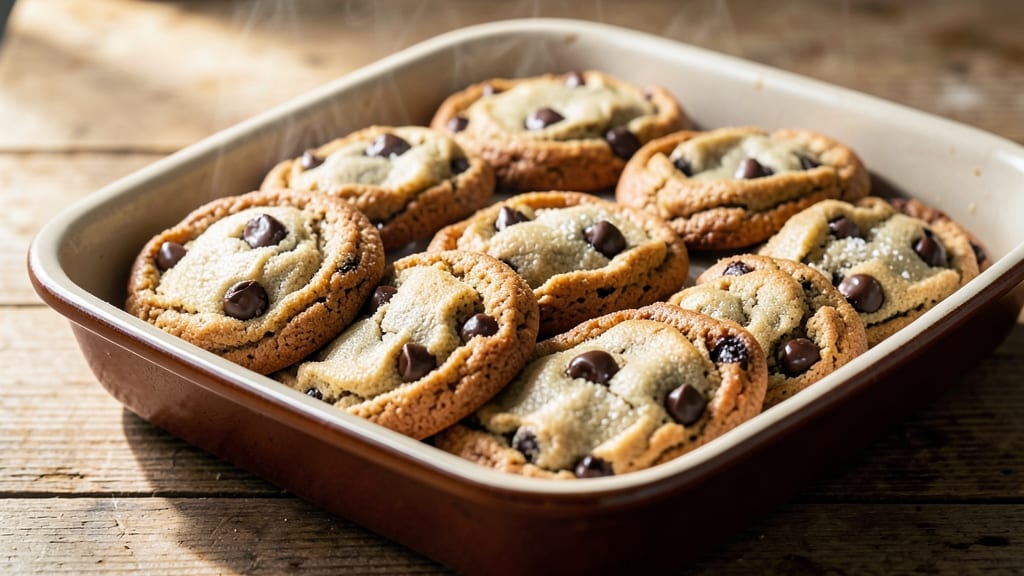
This chewy chocolate chip cookies recipe for 12 delivers perfectly browned edges and gooey centers every time—no more dry, cakey cookies. 🌟 The secret lies in the right balance of brown and white sugar, chilled dough, and precise baking at 350°F. I’ve baked these for years, and this version consistently yields 12 servings (about 24 cookies) with that signature chew you crave.
What sets these apart is the foolproof technique: using melted butter (not creamed) creates a tender texture, while brown sugar adds moisture and caramel notes. The dough rests for 30 minutes to hydrate properly, ensuring even baking.
I also recommend using high-quality chocolate chips—they melt into rich, glossy pockets that stay gooey even after cooling.
By the time they emerge from the oven, your cookies will have golden, crisp edges and soft, chewy centers with melted chocolate oozing out. The aroma alone will have everyone gathering in the kitchen.
Serve warm with a glass of cold milk for the full experience—this is the kind of cookie that disappears in minutes.
Perfect for holiday gatherings, bake sales, or satisfying that afternoon sweet tooth. The recipe scales easily, so double it if you’re feeding a crowd. Let’s get baking—your kitchen will smell like heaven in no time.
Ingredients for chewy chocolate chip cookies recipe for 12
Twelve servings of chewy perfection—just these 10 ingredients transform into golden-edged, gooey-centered cookies.
| Ingredient | Amount | Notes |
|---|---|---|
| Unsalted Butter 🧈 | 1 cup | Melted and cooled to room temperature |
| Packed Brown Sugar 🍚 | 1 ¼ cups | Light or dark, packed firmly |
| Granulated White Sugar 🍚 | ¾ cup | Ensures proper chewiness |
| Large Eggs 🥚 | 2 whole | Room temperature for even mixing |
| Vanilla Extract 🌿 | 2 tsp | Pure extract for authentic flavor |
| All-Purpose Flour 🌾 | 3 ½ cups | Sifted for light texture |
| Baking Soda 🧂 | 1 tsp | Ensures proper rise |
| Diamond Crystal Kosher Salt 🧂 | 1 tsp | Adjusts to taste |
| High-Quality Chocolate Chips 🍫 | 2 ½ cups | Semi-sweet or milk chocolate |
| Toasted Chopped Walnuts 🌰 | 1 cup | Optional for added texture |
The butter makes or breaks these cookies. Use unsalted—the salt is controlled separately—and melt it completely before mixing, then let it cool to room temperature. Trader Joe's and Whole Foods carry excellent European-style butter for this. Brown sugar is non-negotiable here; it adds moisture and that signature caramel flavor. Pack it tightly—lightly tap the measuring cup to remove air bubbles. For chocolate chips, Ghirardelli or Guittard are my go-tos—they melt into glossy pockets that stay gooey even after cooling. Pro tip: Toast your walnuts in a dry pan for 3-4 minutes until fragrant—they add a lovely crunch.
No brown sugar? Substitute with an extra 0.25 cup granulated sugar, but expect slightly less chew. Short on chocolate chips? Use chopped chocolate bars (like Lindt or Ghirardelli) or even white chocolate for a festive twist. The vanilla extract can be swapped for vanilla bean paste if you're feeling fancy—just use the same amount. For a nut-free version, skip the walnuts or swap for toasted coconut flakes. The flour should be all-purpose, but if you only have bread flour, reduce by 0.25 cup for a denser texture. And yes, you can use salted butter if you omit the added salt—just taste the dough before baking.
This dough needs 30 minutes of chilling—don’t skip it! It hydrates the flour and prevents spreading. Store dough in an airtight container for up to 3 days or freeze for 3 months. Baked cookies keep in an airtight tin for 5 days at room temperature, or freeze for 3 months. For extra chew, slightly underbake them—pull them out when edges are golden but centers still look soft. They’ll firm up as they cool. Double the batch? These cookies freeze beautifully—just bake straight from frozen, adding 1-2 minutes to the time.
Why You'll Love This Recipe
- That 1: 1 brown-to-white sugar split? It’s what turns these into the kind of cookies that hold their shape but still melt in your mouth. Honestly, the moment the edges start golden and the centers are still soft? Worth every minute.
- No Fuss Mixing: I just cream the butter, sugars, and eggs together—no stand mixer, no stress. The brown sugar’s stickiness does half the work for you, and by the time I fold in the chocolate chips, I’m already smelling that caramelized vanilla.
- Chewy Magic Ratio: That 1:1 brown-to-white sugar split? It’s what turns these into the kind of cookies that hold their shape but still melt in your mouth. Honestly, the moment the edges start golden and the centers are still soft? Worth every minute.
- Double-Duty Batches: Make a full batch and freeze half for lazy mornings or last-minute gifts. The dough keeps for weeks, and when you’re ready, just scoop and bake—no defrosting needed. (Yes, even on a Tuesday night.)
Step-by-step instructions for chewy chocolate chip cookies
Here's the foolproof method for cookies with crisp edges and gooey centers every time.
🍳 Step 1: Cream Butter and Sugars to Peak Fluffiness
In a stand mixer fitted with the paddle attachment, beat the 1 cup unsalted butter on medium speed until completely smooth and creamy—about 2 minutes. This ensures no lumps remain. Gradually add the 1.25 cups packed brown sugar and 0.75 cup granulated white sugar, mixing continuously until the mixture is light and fluffy, with a pale golden color.
This step is crucial—I've found that creaming for 3-4 minutes total incorporates enough air to create those signature crackly tops. You'll know it's ready when the mixture nearly doubles in volume and leaves faint trails when the paddle lifts. If your butter isn't softened enough, the cookies will spread too much in the oven.
👨🍳 Step 2: Incorporate Eggs and Vanilla for Rich Flavor
Add the 2 whole large eggs, one at a time, mixing on low speed for 30 seconds after each addition until fully combined. The mixture might look slightly curdled at first, but this is normal. Stir in the 2 teaspoons vanilla extract until evenly distributed. Here's the thing—vanilla extract needs to be fully incorporated to prevent pockets of raw flavor in your cookies.
I always use room-temperature eggs for even mixing and better texture. If your eggs are straight from the fridge, let them sit in warm water for 5 minutes first. The mixture should now be smooth and slightly thickened—this is the foundation for that perfect chewy texture.
👨🍳 Step 3: Combine Dry Ingredients and Fold in Chocolate
In a separate bowl, whisk together the 3.5 cups all-purpose flour, 1 teaspoon baking soda, and 1 teaspoon Diamond Crystal kosher salt. With the mixer on low speed, gradually add the dry ingredients to the butter mixture, mixing just until combined—you should still see small flour streaks. Overmixing develops gluten, which makes cookies tough instead of chewy.
Remove the bowl from the mixer and gently fold in the 2.5 cups high-quality chocolate chips and 1 cup toasted chopped walnuts using a silicone spatula. I like to distribute the chocolate chips evenly throughout the dough so every bite has that perfect balance of gooey and crunchy. If you're feeling fancy, reserve some chocolate chips for topping after baking.
⏰ Step 4: Chill the Dough for Perfect Texture
Cover the dough bowl with plastic wrap and refrigerate for at least 30 minutes, but I prefer 1-2 hours for best results. Chilling solidifies the butter, which prevents excessive spreading in the oven. It also allows the flour to fully hydrate, creating that ideal chewy texture. Real talk: Skipping this step leads to flat, cakey cookies instead of the thick, chewy treats you're after.
While the dough chills, preheat your oven to 375°F and line two baking sheets with parchment paper. The dough will be easier to handle after chilling, and you'll get more even cookies when you scoop them. Pro tip: Let the dough sit at room temperature for 5 minutes before scooping if it feels too firm.
🔥 Step 5: Bake to Golden Perfection with Crisp Edges
Using a 2-tablespoon cookie scoop, portion the chilled dough onto the prepared baking sheets, spacing them 2 inches apart—they'll spread! Bake for 10-12 minutes until the edges are golden brown but the centers still look slightly underdone. They'll continue cooking on the hot pan after you remove them from the oven.
I know it seems counterintuitive, but don't overbake! The cookies should pull away from the edges of the parchment paper but still be soft in the center. Let them cool on the baking sheet for 5 minutes before transferring to a wire rack. This resting period helps them set while maintaining that perfect chewy interior. Enjoy them warm for the ultimate experience—each bite should be crisp at the edges with a gooey, molten center.
Pro Tips For Making Chewy Chocolate Chip Cookies Recipe For 12
- Use Cold Butter Cubes: I learned this the hard way—softened butter makes cookies spread like pancakes. Cut your unsalted butter into 1-inch cubes and refrigerate them while mixing the dough. They’ll stay firm enough to hold shape while still creaming smoothly with the sugars.
- Mix Dry Ingredients First: Skip the "toss everything in" approach. Whisk flour, baking soda, and salt together before adding wet ingredients—this prevents lumps and guarantees even distribution. Trust me, your cookies will bake more uniformly.
- Underbake Slightly: The edges should look set but the centers still soft when you pull them at 350°F (175°C). Chocolate chips need time to melt fully, and cookies firm up as they cool. Pull them 1-2 minutes early, or they’ll turn out cakey.
- Chill Dough Overnight: This isn’t just a shortcut—it’s the thing that matters most for chewiness. Divide your dough into balls, flatten slightly, and refrigerate for 12+ hours. The gluten relaxes, and the flavors meld. (Yes, even if you’re impatient like me.)
Troubleshooting your chewy chocolate chip cookies recipe for 12
Dough Too Sticky
If your dough feels like playdough, it’s likely overmixed or too warm. First, check your butter—it should be melted and cooled to room temperature, not hot. I’ve found that using 1 cup melted butter that’s been chilled for 20 minutes after melting solves this.
Also, resist the urge to overmix when combining dry ingredients—just until combined prevents gluten development. If the dough is still too sticky after chilling, add 1-2 tablespoons more flour, but don’t exceed the recipe’s total amount.
Cookies Spread Too Much
Excessive spreading usually means your butter wasn’t chilled enough or your oven runs hot. First, ensure your dough has rested for the full 30-60 minutes in the fridge. If your kitchen is warm, chill the dough for an extra 15-20 minutes.
Also, measure your butter accurately—packed brown sugar can add moisture, so use a kitchen scale if you’re unsure. For extra insurance, bake on the middle rack where heat is most even, and avoid overcrowding the pan.
Cakey Texture Instead of Chewy
Cakey cookies often result from overbaking or using too much flour. Pull your cookies out when edges are golden but centers still look soft—they’ll firm up as they cool. If your dough feels dry, add 1 tablespoon milk or water to the mix.
For extra chew, I’ve had great success using 1.25 cups packed brown sugar and only 0.75 cup granulated sugar—the brown sugar adds moisture and chewiness. Finally, avoid overmixing the dry ingredients, which develops gluten and makes cookies tough.
Chocolate Chips Not Melting
If your chocolate chips stay hard after baking, they likely weren’t high-quality or your oven wasn’t hot enough. I always use Ghirardelli or Guittard chocolate chips—they melt beautifully. For extra insurance, place chips in a microwave-safe bowl and heat for 10-15 seconds before folding into dough.
Also, ensure your oven is fully preheated to 375°F and bake on the middle rack where heat circulates evenly. If chips still don’t melt, try baking for 1-2 minutes longer or placing the pan under the broiler for 10 seconds at the end.
Burnt Edges, Raw Centers
Uneven baking often happens with cold pans or inconsistent oven heat. Always use parchment-lined baking sheets and let them sit in the oven for 2-3 minutes before adding dough to preheat. Rotate pans halfway through baking for even heat distribution.
If your oven runs hot, reduce temperature to 350°F. For extra insurance, bake on the middle rack where heat is most consistent. Pull cookies out when edges are golden but centers still look soft—they’ll finish cooking as they cool.
Cookies Too Dry
Dry cookies usually mean overbaking or using old ingredients. First, check your baking time—pull cookies out when edges are golden but centers still look slightly underdone. If your dough feels dry, add 1 tablespoon milk or water to the mix.
For extra moisture, I’ve had great success using 1.25 cups packed brown sugar—it adds chewiness and prevents dryness. Also, avoid overmixing the dough, which can develop gluten and make cookies tough. Finally, store baked cookies in an airtight container with a slice of bread to retain moisture.
Nutrition facts
Frequently asked questions
Why do your cookies turn out chewier than other recipes?
The secret lies in the sugar ratio and dough handling. Using 1.25 cups packed brown sugar (not white) adds moisture and caramelization for that signature chew, while chilling the dough for 30+ minutes hydrates the flour properly. The melted butter method also creates a tender crumb that stays soft longer than creamed butter recipes.
Can I make these cookies without butter?
Yes! For a dairy-free version, substitute with 1 cup coconut oil (refrigerated until solid) or 1 cup vegan butter. Chill the dough for 45 minutes instead of 30 to compensate for the lack of butter's fat content. The texture will be slightly denser but still chewy. Just ensure your chocolate chips are dairy-free if avoiding butter entirely.
How do I adjust the recipe for 12 servings?
This recipe already yields 12 servings (about 24 cookies). For smaller batches, reduce all ingredients by 50%—just keep the 30-minute chill time and 375°F temperature. For larger batches (e.g., 36 cookies), double everything but bake in 12-minute batches to prevent overcrowding the oven.
What's the best way to store leftover cookies?
Keep cookies fresh for 5 days in an airtight container at room temperature. For longer storage, freeze baked cookies for up to 3 months—wrap individually in plastic wrap to prevent freezer burn. Reheat in a 300°F oven for 2-3 minutes to restore that warm, gooey texture.
Can I add other mix-ins besides walnuts?
Swap walnuts for toasted pecans, white chocolate chips, or even dried cranberries (tossed in flour first). For extra decadence, fold in ½ cup chopped toasted almonds or ½ cup butterscotch chips. Just keep the total mix-ins to 1 cup to maintain the perfect chewy texture.